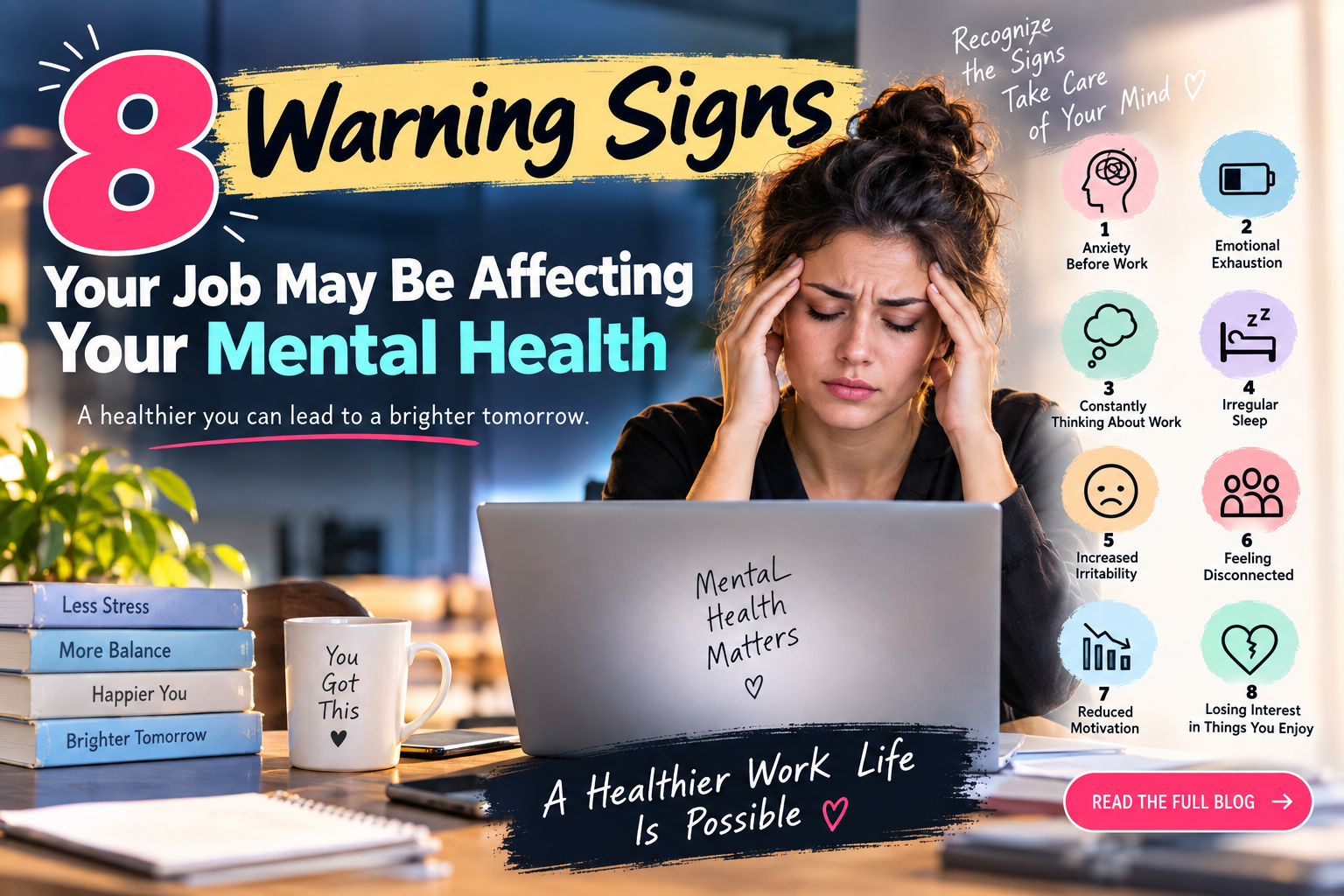
Not everyone experiences work stress in the same way. Some people become anxious, while others feel exhausted, disconnected, or unusually irritable.
The following warning signs can help you recognize when workplace pressure may be affecting your emotional well-being. They are not a diagnostic checklist, and experiencing one or more does not necessarily mean you have a mental health condition.
1. You Feel Anxious Before the Workday Even Begins
If you regularly wake up feeling nervous about work, your body may be responding to ongoing stress.
You might notice:
- A racing mind before opening your laptop.
- Worry about meetings, deadlines, or your manager’s reaction.
- A tight feeling in your stomach on Sunday evenings.
- Difficulty relaxing even when the next workday is hours away.
Real-life example: Imagine a San Francisco marketing professional named Alex. Every Sunday night, Alex starts checking work emails and mentally rehearsing Monday’s meetings. Even after finishing the week’s tasks, the thought of returning to work creates anxiety.
Over time, this pattern can make it difficult to enjoy personal time.
What it may mean: Your work environment or your expectations about work may be contributing to persistent anxiety. If the worry continues outside working hours and interferes with daily life, consider talking with a qualified mental health professional.
2. You Feel Emotionally Exhausted Even After Resting
Feeling tired after a busy day is normal. But persistent emotional exhaustion can feel different from ordinary tiredness.
You may feel as though you have nothing left to give, even after sleeping or taking time off.
Common experiences include:
- Feeling overwhelmed by relatively small tasks.
- Struggling to find the energy to communicate with coworkers.
- Feeling mentally drained before the workday ends.
- Finding it difficult to recover after a weekend.
Real-life example: Priya works in a demanding technology role in San Francisco. She used to enjoy solving problems with her team, but lately, even a routine project update feels exhausting. After work, she has little energy for hobbies or social plans.
This could be a sign of prolonged work stress or burnout, but other factors can also cause fatigue.
The World Health Organization describes burnout as an occupational phenomenon associated with chronic workplace stress that has not been successfully managed. Its key dimensions include exhaustion, increased mental distance or cynicism toward work, and reduced professional efficacy.
3. You Cannot Stop Thinking About Work After Hours
Do you finish work but continue thinking about unfinished tasks, difficult conversations, or tomorrow’s deadlines?
When work thoughts repeatedly intrude on personal time, it can become harder to relax and recharge.
You might:
- Check emails during dinner or family time.
- Mentally replay a conversation with your manager.
- Feel guilty when you are not being productive.
- Struggle to enjoy weekends because you are anticipating Monday.
Real-life example: Daniel leaves his San Francisco office at 6 p.m., but his mind stays at work. During dinner with friends, he keeps thinking about a client presentation. He checks his phone several times and feels uneasy whenever a notification appears.
The issue is not simply that Daniel cares about his work. It is that he finds it difficult to mentally disengage from it.
Try this: Create a short end-of-day routine. Write down unfinished tasks, identify the first step for tomorrow, and set a clear stopping point for work notifications when your role allows it.
4. Your Sleep Is Becoming Irregular
Ongoing stress can interfere with sleep, while poor sleep can make it more difficult to cope with stressful situations.
Work-related sleep difficulties may include:
- Taking a long time to fall asleep because of worrying.
- Waking up during the night and thinking about work.
- Waking earlier than planned with a sense of dread.
- Feeling unrefreshed even after spending enough time in bed.
Real-life example: Maria has an important project deadline approaching. She spends hours in bed thinking about everything that could go wrong. The next morning, she feels tired and struggles to concentrate during meetings.
This can create a difficult cycle: stress disrupts sleep, and fatigue makes work feel even more demanding.
If sleep problems persist, affect your daily functioning, or are accompanied by other concerning symptoms, speak with a healthcare professional. Sleep difficulties can have many causes, so it is important not to assume work is the only one.
5. You Become More Irritable or Emotionally Sensitive
Work stress may affect how you respond to everyday situations.
You might notice that you:
- Become frustrated over minor mistakes.
- Feel unusually sensitive to feedback.
- Snap at coworkers or loved ones.
- Have less patience for conversations.
- Feel emotionally overwhelmed by ordinary responsibilities.
Real-life example: James is usually calm and supportive, but after several weeks of back-to-back deadlines, he begins responding sharply to his partner and coworkers. Later, he feels guilty because his reactions do not reflect how he wants to treat people.
Stress can influence mood and relationships, but irritability alone does not establish a mental health diagnosis.
A useful first step is to notice when these reactions occur. Are they more frequent after demanding meetings, long workdays, or periods without adequate rest?
6. You Lose Interest in Activities You Used to Enjoy
One possible warning sign of emotional distress is losing interest in activities that previously made you feel happy or connected.
For example:
- You stop meeting friends after work.
- You cancel hobbies because you feel too drained.
- You no longer look forward to weekends.
- You feel disconnected from activities that once mattered to you.
Real-life example: Sarah used to enjoy exploring San Francisco, meeting friends for coffee, and taking weekend walks. Recently, she spends most of her free time recovering from work and no longer feels excited about making plans.
A loss of interest can occur for many reasons, including stress, exhaustion, and depression. If it persists or affects other areas of life, consider seeking professional support rather than dismissing it as simply being busy.
7. Your Concentration and Confidence Are Declining
When your mind is overloaded, concentrating and making decisions can become more difficult.
You may find yourself:
- Reading the same email several times.
- Forgetting details discussed in meetings.
- Putting off decisions you previously handled easily.
- Making avoidable mistakes.
- Doubting your abilities despite having relevant experience.
Real-life example: Michael is an experienced project manager. After months of competing priorities and frequent interruptions, he starts second-guessing routine decisions. He spends extra hours checking his work because he no longer trusts his own judgment.
This does not automatically mean Michael has lost his skills. Stress, poor sleep, and other health factors can affect concentration and confidence.
If these difficulties are new, persistent, or significantly affecting your performance, a healthcare professional can help explore possible causes.
8. You Feel Trapped, Hopeless, or Unable to Imagine Things Improving
Perhaps the most concerning sign is feeling as though nothing you do will make your work situation better.
You might think:
- “I cannot keep working like this.”
- “There is no way to make this situation better.”
- “I have to tolerate this, no matter how I feel.”
- “My entire life revolves around work.”
These thoughts deserve attention, particularly if they become persistent or extend beyond your job.
Real-life example: A fictional San Francisco professional named Taylor has spent months trying to manage an unsustainable workload. Taylor feels unable to ask for help, worries about financial security, and starts believing that every possible option will lead to failure.
Taylor’s experience illustrates why it is important to look at both emotional well-being and the circumstances contributing to distress.
Feeling trapped does not mean you are out of options. Talking with someone you trust, exploring workplace adjustments, and seeking professional support can help you identify possible next steps.
If hopelessness includes thoughts of suicide or self-harm, seek immediate support. In the United States, call or text 988 for the Suicide & Crisis Lifeline; call 911 for an immediate life-threatening emergency.
Work Stress vs. Burnout vs. Anxiety: What’s the Difference?
These terms are related, but they do not mean exactly the same thing. Understanding the distinctions can help you describe what you are experiencing and decide what kind of support to seek.
| Experience | What it generally means | What it may look like |
| Work stress | A response to work demands or pressures | Feeling tense before a deadline |
| Burnout | A work-related phenomenon linked to chronic unmanaged workplace stress | Exhaustion, cynicism about work, reduced professional effectiveness |
| Anxiety | Persistent worry or apprehension that may continue even without an immediate threat | Ongoing dread, excessive worry, difficulty relaxing |
Stress may ease when the immediate problem is resolved. Anxiety can persist beyond the original trigger, while burnout specifically concerns the occupational context. These experiences can overlap, and only a qualified professional can assess whether symptoms meet the criteria for a mental health condition.
The key takeaway: You do not need to label yourself with a diagnosis to recognize that your current work situation is affecting your well-being.
Why Are San Francisco Professionals Experiencing Work Stress?
Work stress can affect people in any industry, but certain workplace conditions can make it harder to maintain emotional well-being.
San Francisco professionals may encounter demanding schedules, competitive environments, rapid changes in technology, financial responsibilities, and pressure to maintain high performance.
However, these experiences are not universal, and not every demanding workplace causes mental health difficulties.
The World Health Organization identifies several workplace risks that can affect mental health, including excessive workloads, limited control over work, job insecurity, discrimination, poor support, and long or inflexible working hours.
Common workplace stressors
- High expectations: Feeling that every project must be perfect.
- Unclear responsibilities: Receiving conflicting instructions from different managers.
- Limited boundaries: Being expected to respond to messages outside working hours.
- Workplace conflict: Dealing with persistent tension or difficult professional relationships.
- Job insecurity: Worrying about layoffs, restructuring, or financial stability.
Recognizing the source of your stress can help you identify which changes might make a difference.
How Can You Start Managing Work Stress?
You do not have to change your entire career overnight to begin taking care of your mental health.
Start with manageable steps that address your immediate stress and help you understand what needs to change.
Your workplace stress check-in
Use this checklist to reflect on your experiences. It is not a diagnostic test.
0 of 6 steps explored
Identify the work situations that trigger the most stress.
Notice how work affects your sleep, mood, and relationships.
Set a realistic stopping time for work when possible.
Take short breaks during demanding workdays.
Talk with someone you trust about what you are experiencing.
Consider professional support if symptoms persist or worsen.
If these steps do not provide enough relief, or your symptoms are interfering with daily life, consider talking with a healthcare provider or mental health professional.
Can Work Stress Coaching in San Francisco Help?
Work stress coaching in San Francisco may help professionals develop practical strategies for managing workplace pressure, setting boundaries, and navigating challenging professional situations.
Depending on the coach’s qualifications and approach, coaching may focus on:
- Identifying personal stress triggers and unhelpful work patterns.
- Practicing assertive communication and boundary-setting.
- Developing realistic priorities and time-management strategies.
- Preparing for difficult workplace conversations.
- Building routines that support work-life balance.
- Clarifying career goals and possible next steps.
For example, a professional who feels overwhelmed by constant requests might work on communicating capacity, negotiating priorities, and creating a more manageable schedule.
Important distinction: Coaching is not the same as mental health treatment. If you are experiencing persistent depression, severe anxiety, or other significant symptoms, a licensed mental health professional can assess your needs and discuss appropriate care. Coaching should not replace treatment when treatment is needed.
When Should You Seek Professional Help?
Consider seeking professional help when:
- Symptoms persist for around two weeks or longer, particularly if they are severe or worsening.
- Anxiety or low mood interferes with everyday activities.
- Sleep difficulties are affecting your ability to function.
- You are withdrawing from relationships or activities.
- You are struggling to manage work or personal responsibilities.
These are reasons to seek an assessment, not proof that you have a particular diagnosis. You do not need to wait until your symptoms become severe to ask for support.
Final Thoughts: Your Mental Health Matters Beyond Your Job
A demanding job does not automatically mean you have a mental illness. But persistent exhaustion, anxiety, sleep problems, irritability, and loss of interest in everyday activities deserve attention.
Recognizing these warning signs can help you understand what you are experiencing and take steps toward a healthier relationship with work.
If workplace pressure is affecting your emotional well-being, consider exploring Work Stress Coaching in San Francisco to learn practical stress-management strategies, develop healthier boundaries, and clarify your next steps.
You deserve support that considers both your professional responsibilities and your well-being outside the workplace.
Ready to take the next step?
If work stress is making it difficult to enjoy your life, consider reaching out for support. You can start by identifying what is causing the most pressure and exploring which resources fit your needs.