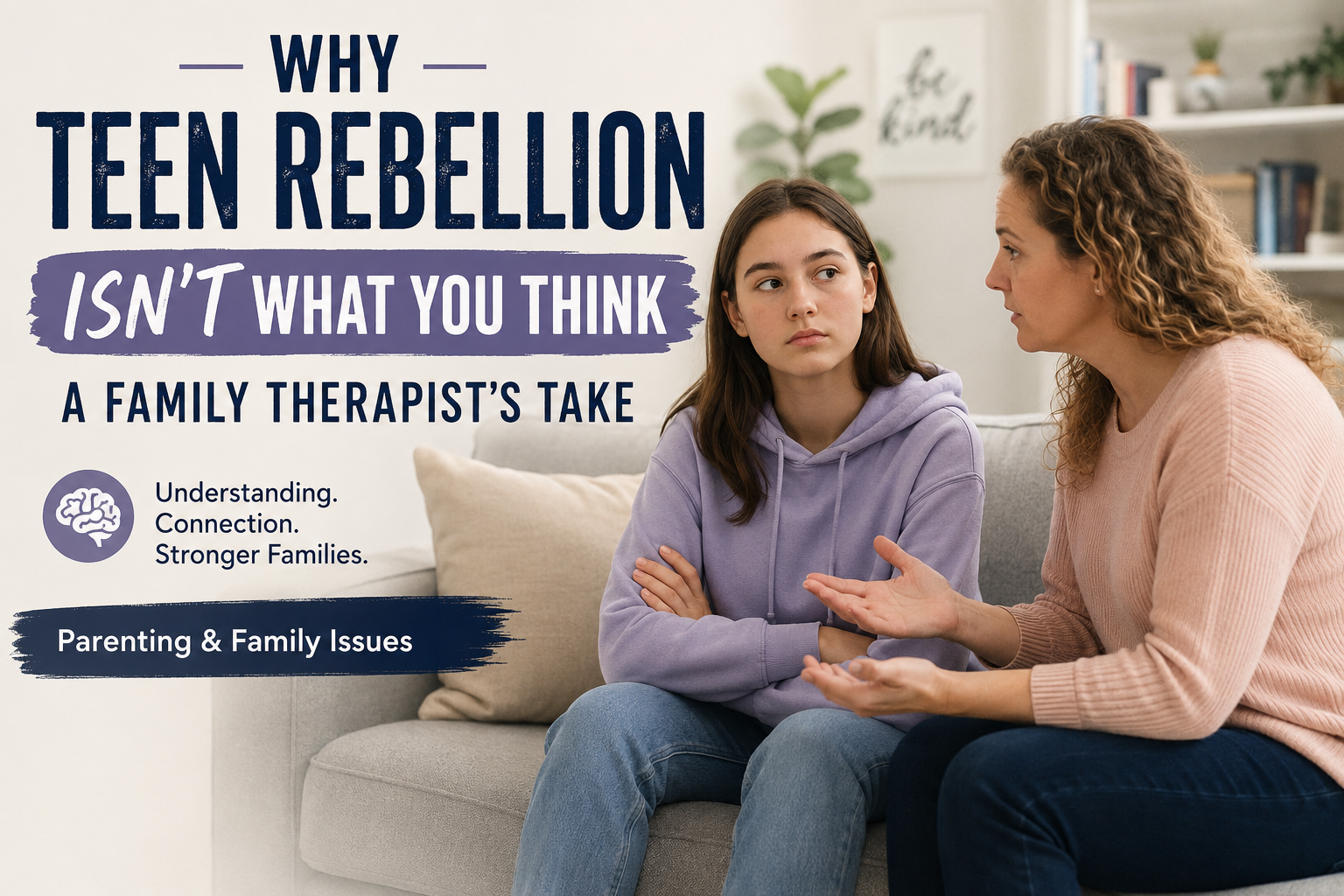
Many parents describe the teenage years as a constant battle. Curfews are challenged, rules are questioned, conversations turn into arguments, and simple requests can feel like negotiations. It’s easy to label these behaviors as “teen rebellion.”
But here’s what many family therapists know: most teen rebellion isn’t about rejecting parents; it’s about discovering independence.
Understanding the difference can completely change how families respond to conflict. Instead of seeing every disagreement as disrespect, parents can recognize many behaviors as part of healthy emotional development.
This guide explains what teen rebellion really means, why it happens, when it becomes a concern, and how families can strengthen relationships during these challenging years.
What Is Teen Rebellion?
Teen rebellion is the process of adolescents testing boundaries as they develop their own identity, values, and independence.
In many cases, it is a normal developmental stage rather than a sign of poor parenting.
Common examples include:
- Wanting more privacy
- Questioning family rules
- Preferring friends over family activities
- Expressing different opinions
- Changing clothing or hairstyle
- Seeking greater independence
- Wanting more decision-making power
These behaviors often reflect growth not rejection.
Why Do Teenagers Rebel?
Several developmental changes happen during adolescence that naturally increase conflict.
Brain Development
A teenager’s brain is still developing, especially the areas responsible for:
- Decision-making
- Emotional regulation
- Impulse control
- Risk assessment
This means teens often experience strong emotions before they fully develop the ability to manage them.
Identity Formation
Teenagers naturally ask questions like:
- Who am I?
- What do I believe?
- Where do I belong?
Testing boundaries helps them answer these questions.
Desire for Independence
As children grow older, they seek more control over:
- Friendships
- Clothing
- School choices
- Hobbies
- Personal schedules
Parents often interpret this as rebellion when it’s actually increasing autonomy.
Is Teen Rebellion Always a Bad Thing?
No.
Healthy rebellion often indicates that a teenager is learning to think independently.
Positive signs include:
- Respectfully expressing disagreement
- Developing personal interests
- Taking age-appropriate responsibility
- Building confidence
- Learning decision-making skills
- Setting personal goals
A teen who never questions anything may actually struggle with independence later in adulthood.
The goal is healthy independence not complete obedience.
Teen Rebellion vs. Serious Behavioral Problems

Not every difficult behavior is normal teenage rebellion.
| Healthy Teen Independence | Behavior That May Need Professional Help |
| Occasional arguments | Constant aggression or violence |
| Wanting privacy | Complete withdrawal from family |
| Mood changes | Persistent depression or hopelessness |
| Testing rules | Dangerous risk-taking behaviors |
| Questioning authority | Repeated illegal activities |
| Spending more time with friends | Substance abuse |
| Strong opinions | Self-harm or suicidal thoughts |
If behaviors begin affecting school, relationships, safety, or mental health, professional support may be appropriate.
What Are the Biggest Parenting Mistakes During Teen Rebellion?
Many parents unintentionally increase conflict by reacting emotionally.
Common mistakes include:
Trying to Control Everything
Micromanaging every decision often leads to more resistance.
Taking Every Argument Personally
A teenager challenging a rule doesn’t always mean they’re rejecting their parent.
Responding With Anger
When parents escalate emotionally, teens often respond the same way.
Ignoring Their Feelings
Saying:
- “You’ll get over it.”
- “You’re overreacting.”
can make teenagers stop communicating.
Inconsistent Rules
Changing expectations daily creates confusion and frustration.
How Can Parents Respond More Effectively?
Family therapists often recommend connection before correction.
Helpful strategies include:
Listen Before Solving
Ask questions such as:
- “Can you help me understand?”
- “Tell me what happened.”
Listening reduces defensiveness.
Stay Calm
Teen emotions are intense.
Parents who remain calm often help regulate the conversation.
Set Clear Boundaries
Healthy parenting includes both:
- Warmth
- Consistency
Boundaries should be explained rather than enforced through fear.
Give Age-Appropriate Freedom
As trust grows, responsibilities should grow too.
Examples include:
- Managing homework
- Choosing extracurricular activities
- Planning personal schedules
- Handling part-time jobs
Focus on Respect Both Ways
Parents often expect respect but forget to model it.
Respectful conversations encourage respectful responses.
Why Does Communication Break Down?
Communication usually breaks down when both sides stop feeling heard.
Parents may think:
“My teen never listens.”
Teenagers often think:
“My parents never understand me.”
Improving communication starts with curiosity instead of assumptions.
Helpful communication habits include:
- Asking open-ended questions
- Avoiding lectures
- Giving teens time to respond
- Acknowledging emotions
- Choosing calm moments for difficult conversations
Small improvements in daily conversations often reduce larger conflicts later.
When Should Parents Consider Family Therapy?
Family therapy isn’t only for families in crisis.
Many families seek therapy to improve communication before problems become severe.
Professional support may help when:
- Arguments happen daily
- Family members avoid each other
- Trust has broken down
- Teen refuses school
- Anxiety or depression is present
- Divorce or separation affects the family
- Major life changes increase stress
- Parents feel overwhelmed
Early support is often easier than repairing years of conflict.
What Does Family Therapy Teach Parents and Teens?
Family therapy focuses on improving relationships rather than assigning blame.
Sessions may help families learn:
- Better communication skills
- Healthy conflict resolution
- Emotional regulation techniques
- Boundary setting
- Active listening
- Problem-solving strategies
- Ways to rebuild trust
- Collaborative decision-making
The goal is creating a home where everyone feels heard while maintaining healthy parental leadership.
Quick Signs Your Teen Still Trusts You
Parents often worry that arguments mean they’ve lost their relationship.
In reality, trust may still be strong if your teen:
- Comes to you during difficult situations
- Shares important news eventually
- Accepts guidance after calming down
- Shows affection in their own way
- Respects important family values
- Asks for advice when facing challenges
Conflict and connection can exist at the same time.
Final Thoughts
Teen rebellion is often misunderstood. What looks like defiance may actually be a teenager practicing independence, forming an identity, and learning how to navigate adulthood.
This doesn’t mean parents should ignore disrespect or remove boundaries. Instead, it means recognizing that healthy development includes questions, disagreements, and changing perspectives.
Families who respond with empathy, clear expectations, and open communication are often better equipped to navigate the challenges of adolescence. When conflicts become overwhelming or begin affecting emotional well-being, seeking support from a qualified family therapist can provide practical tools to rebuild trust and strengthen family relationships.
Rather than asking, “How do I stop my teen from rebelling?”, a more helpful question is:
“How can I guide my teenager toward independence while preserving a strong, supportive relationship?”
That shift in perspective can make all the difference in addressing Parenting & Family Issues with confidence, understanding, and compassion.