Feeling overwhelmed, exhausted, or emotionally drained can happen to anyone. But stress and burnout are not the same thing. Understanding the difference can help you recognize what your mind and body need before the problem becomes harder to manage.
Stress often comes from having too many demands at once. Burnout is usually the result of prolonged, unmanaged stress that leaves you feeling emotionally and physically depleted.
Here is how to tell the difference and what you can do about each.
What Is Stress?
Stress is the body and mind’s response to pressure, demands, or challenging situations.
Work deadlines, relationship problems, financial concerns, major life changes, or an overloaded schedule can all trigger stress.
Common signs of stress include:
- Feeling worried or tense
- Racing thoughts
- Irritability or frustration
- Trouble concentrating
- Headaches or muscle tension
- Changes in sleep
- Feeling overwhelmed
- Increased heart rate
- Difficulty relaxing
Stress can be uncomfortable, but it is often temporary and connected to a specific situation.
Once the stressful situation improves or you get enough rest and support your stress levels may decrease.
What Is Burnout?
Burnout is a state of physical, mental, and emotional exhaustion caused by prolonged or excessive stress.
Burnout can develop when you continue functioning under pressure without enough recovery, boundaries, or support.
Unlike ordinary stress, burnout often affects how you feel about your responsibilities, work, relationships, and even yourself.
Common signs include:
- Persistent exhaustion
- Emotional numbness or detachment
- Loss of motivation
- Cynicism or negativity
- Feeling ineffective or unproductive
- Difficulty concentrating
- Withdrawing from others
- Feeling like everything is too much
- Losing enjoyment in activities you once liked
Burnout does not necessarily disappear after one good night’s sleep or one relaxing weekend. Recovery usually requires addressing the underlying sources of prolonged stress.
Burnout vs. Stress: What’s the Difference?
The simplest distinction is this:
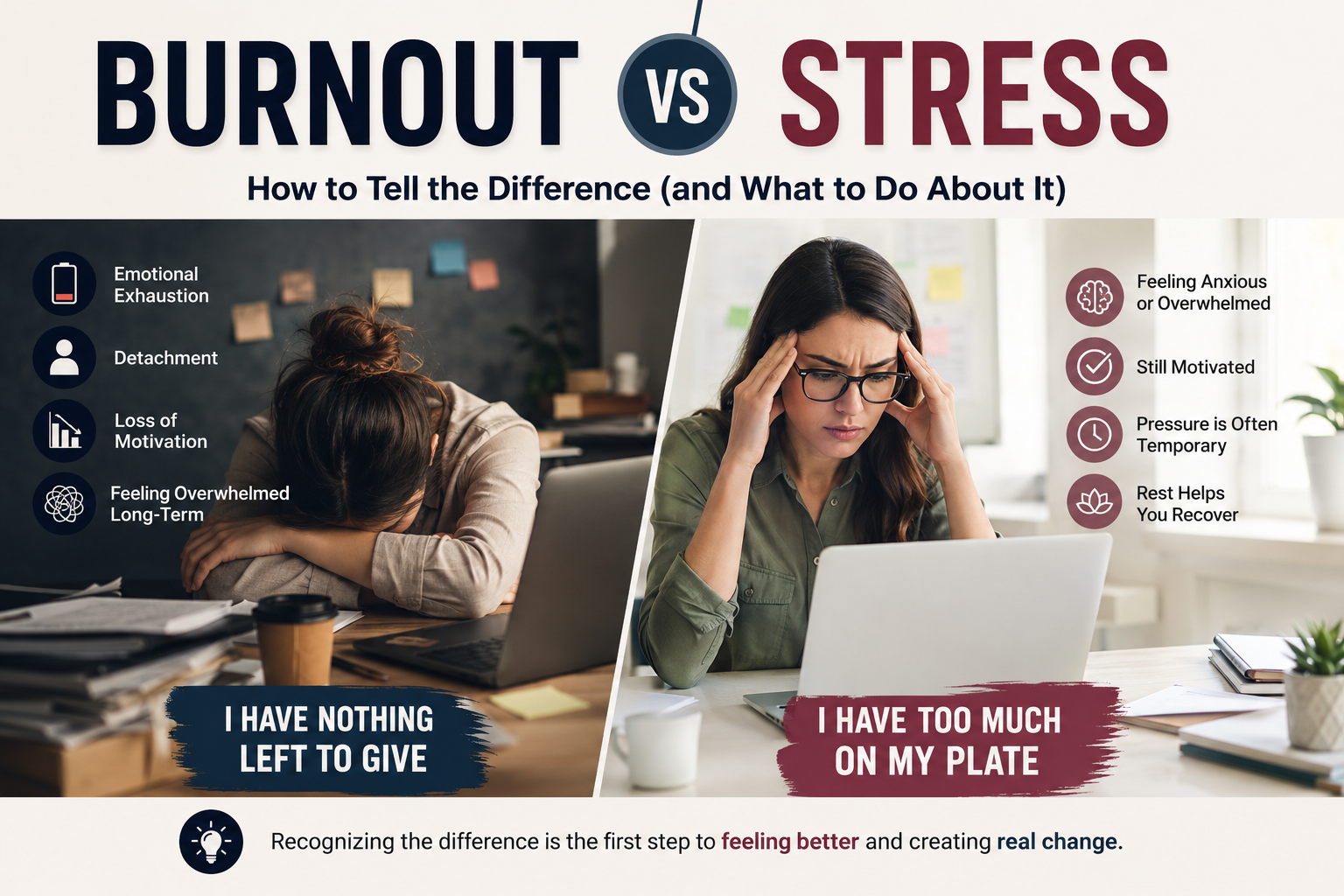
Stress often feels like “I have too much to handle.” Burnout can feel like “I have nothing left to give.”
| Stress | Burnout |
| Often linked to a specific pressure | Usually develops after prolonged stress |
| You may feel anxious or overwhelmed | You may feel emotionally exhausted or numb |
| You may still have motivation | Motivation can significantly decrease |
| Rest may provide noticeable relief | Rest alone may not be enough |
| You may feel that things are out of control | You may feel detached or hopeless about responsibilities |
| Usually temporary | Can persist without meaningful changes |
The two can overlap. Ongoing stress can contribute to burnout, especially when demands remain high and recovery remains low.
How Can You Tell If You’re Stressed or Burned Out?

Ask yourself a few simple questions.
Do I feel overwhelmed but still motivated to solve the problem?
You may be experiencing stress.
Do I feel emotionally exhausted and disconnected from what I normally care about?
Burnout may be a possibility.
Does rest noticeably improve how I feel?
If yes, stress or temporary exhaustion may be more likely.
Have I felt drained, detached, or unmotivated for an extended period?
That may signal that your stress has progressed into something more serious.
The goal is not to diagnose yourself. Instead, these questions can help you recognize when it may be time to slow down and seek additional support.
What Causes Burnout?
Burnout is not always caused by having a “busy job.” It can develop anywhere prolonged demands consistently exceed your ability to recover.
Common contributors include:
- Excessive workload
- Lack of control over responsibilities
- Unrealistic expectations
- Poor work-life boundaries
- Ongoing relationship conflict
- Caregiving responsibilities
- Financial pressure
- Lack of recognition or support
- Perfectionism
- Constant availability through technology
- Insufficient rest and recovery
Sometimes the problem is not simply how much you are doing, but how long you have been doing it without adequate support or recovery.
What Can You Do About Stress?
If stress is temporary and connected to a specific situation, start by reducing the pressure where possible.
1. Identify the Source
Ask yourself: “What is creating the most pressure right now?”
Be specific. Instead of saying “everything is stressful,” identify whether the biggest issue is work, relationships, finances, sleep, responsibilities, or something else.
2. Break Large Problems Into Smaller Steps
When everything feels urgent, prioritize.
Choose the most important task, complete it, and then move to the next one. You do not have to solve everything at once.
3. Protect Your Recovery Time
Sleep, physical activity, relaxation, hobbies, and time away from demanding environments can help your body recover from everyday stress.
4. Set Boundaries
If possible, reduce unnecessary commitments and communicate realistic expectations.
Saying “I can’t take that on right now” can be an important part of managing stress.
5. Talk to Someone
Talking with a trusted person or mental health professional can help you gain perspective and identify practical ways to manage ongoing pressure.
What Can You Do About Burnout?
Burnout generally requires more than simply “taking a day off.”
Start by asking what needs to change, not just how you can push yourself harder.
Consider:
- Reducing unnecessary responsibilities
- Establishing stronger work-life boundaries
- Taking meaningful breaks
- Improving sleep and daily recovery
- Asking for help or additional support
- Reconsidering unrealistic expectations
- Making time for activities that genuinely restore you
- Speaking with a mental health professional
If your environment continually creates overwhelming demands, recovery may require changing the conditions contributing to the burnout, not simply becoming better at tolerating them.
Stress Relief vs. Burnout Recovery: Which Approach Do You Need?
Choose stress-management strategies when:
You are temporarily overwhelmed but still feel connected to your goals, relationships, and responsibilities.
Consider deeper burnout recovery when:
You have experienced prolonged exhaustion, emotional detachment, loss of motivation, or a persistent sense that you cannot keep going at the same pace.
In other words, stress management focuses on reducing immediate pressure, while burnout recovery often requires restoring your energy and changing the patterns that created the exhaustion.
When Should You Talk to a Mental Health Professional?
Consider seeking professional support if exhaustion, anxiety, irritability, detachment, or low motivation is interfering with your work, relationships, sleep, or everyday life.
A therapist can help you:
- Identify sources of chronic stress
- Understand unhealthy patterns
- Develop healthier coping strategies
- Establish realistic boundaries
- Work through emotional exhaustion
- Improve communication
- Create sustainable changes
You do not have to wait until you are completely burned out before asking for help.
The Bottom Line
Stress and burnout can look similar, but they are not identical. Stress is often a response to short-term or manageable pressure. Burnout is more closely associated with prolonged stress and can involve deep emotional exhaustion, detachment, and loss of motivation.
Recognizing the difference is the first step.
If you are feeling overwhelmed, don’t treat exhaustion as a personal failure. Your mind and body may be signaling that something needs to change. Start with small adjustments, strengthen your boundaries, seek support when needed, and consider professional help when stress begins affecting your ability to function or enjoy your life.