Family dynamics can be complex. When one person in a household experiences stress, conflict, or trauma, the impact radiates across the entire home. Family counseling addresses these shared challenges by treating the family system as an interconnected unit rather than focusing on a single individual.
Research in clinical psychology and systemic therapy demonstrates that structured family interventions produce long-term, measurable changes in relational dynamics, communication habits, and overall mental health.
Here are 9 research-backed benefits of family coaching, along with practical breakdowns of how systemic therapy transforms daily home life.
What Is Family Coaching?
Family Coaching (also known as family therapy or systemic therapy) is a specialized branch of psychotherapy that treats psychological issues, behavioral patterns, and emotional distress within the context of the family system.
Unlike individual therapy, which focuses primarily on an individual’s internal thoughts and emotions, family coaching examines how individual behaviors interact with and influence the family unit as a whole.
Key Characteristics of Family Coaching
- Systemic Focus: Views the family as an emotional unit where every member’s behavior impacts the rest of the group.
- Goal-Oriented: Focuses on practical problem-solving, behavioral modification, and communication repair.
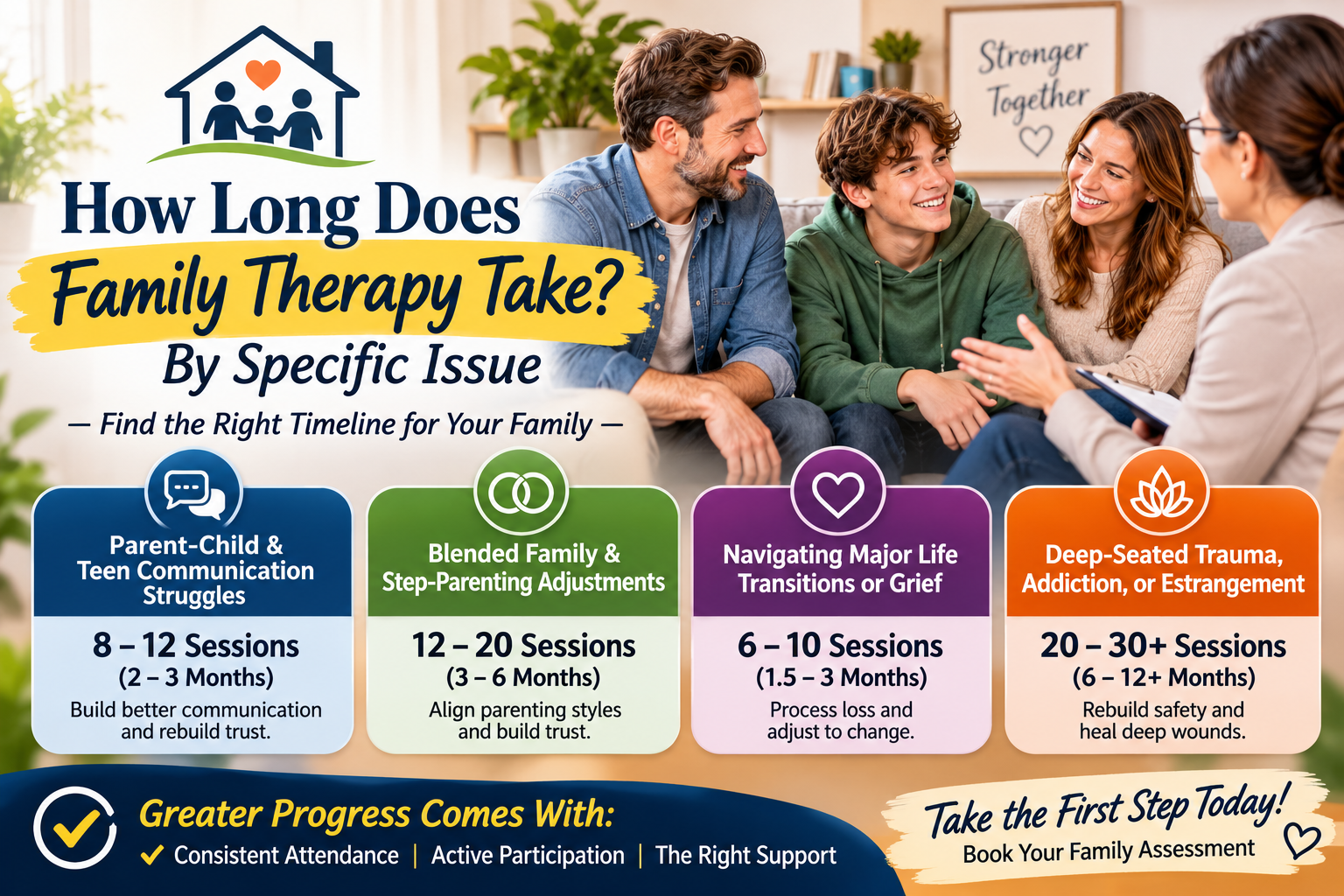
- Short-Term Duration: Typically ranges from 8 to 20 sessions depending on the specific approach used (e.g., Structural Family Therapy or Functional Family Therapy).
- Collaborative: Involves multiple family members in joint sessions to observe real-time interactions and rebuild relationship patterns.
How Does Family Coaching Work?
Family coaching works by identifying negative interaction patterns (known as “systemic loops”) and replacing them with healthier communication strategies and boundaries.
Rather than assigning blame to an “identified patient” (the family member displaying symptomized distress), a licensed family therapist helps the household understand how shared habits and implicit rules contribute to the conflict.
The Standard Process of Family Therapy
- Assessment Phase: The therapist observes communication styles, structural hierarchy, and hidden dynamics within the household.
- Pattern Identification: The family identifies recurring conflict triggers and destructive interaction loops.
- Skill Acquisition: Members learn active listening, emotional regulation, boundary setting, and practical conflict-resolution tools.
- Integration & Practice: The family practices these new behaviors during structured in-session exercises and through assigned at-home tasks.
9 Research-Backed Benefits of Family Counseling
1. Rebuilds Effective Communication Patterns
Family coaching breaks entrenched patterns of passive-aggressive communication, emotional withdrawal, and aggressive confrontation by teaching structured active listening skills.
Research consistently shows that poor communication is both a primary driver and a symptom of family distress. In therapy, families learn to replace “you-statements” (which trigger defensive reactions) with “I-statements” that clearly articulate needs and boundaries.
Real-Life Example: When 15-year-old Maya began staying late at school without calling, her parents responded with strict curfews and yelling. Through therapy, the family learned that Maya felt overwhelmed by her parents’ constant questioning about college applications, while her parents felt terrified for her safety. Replacing accusations with clear, scheduled check-ins restored trust and reduced nightly arguments.
2. De-escalates High-Conflict Dynamics
Systemic therapy provides families with real-time de-escalation techniques, helping members regulate emotional responses before arguments turn destructive.
High-conflict households often fall into rapid escalation loops where small misunderstandings trigger severe emotional outbursts. Family therapists introduce pause protocols, emotional grounding techniques, and structured time-out strategies to keep conversations constructive.
- Emotional Regulation: Teaches members to identify physiological stress signals before speaking.
- Time-Out Agreements: Establishes pre-agreed rules for taking breaks during intense discussions without resorting to stonewalling.
- Perspective-Taking: Exercises that force conflicting members to restate each other’s views accurately before replying.
3. Restores Healthy Structural Boundaries
Family coaching re-establishes appropriate parental leadership and healthy boundaries between generations, preventing issues like parentification or over-enmeshment. According to Structural Family Therapy principles established by Salvador Minuchin, families require clear generational boundaries to function smoothly. Problems often arise when parents rely on children for emotional support (parentification) or when boundaries are so rigid that members feel isolated.
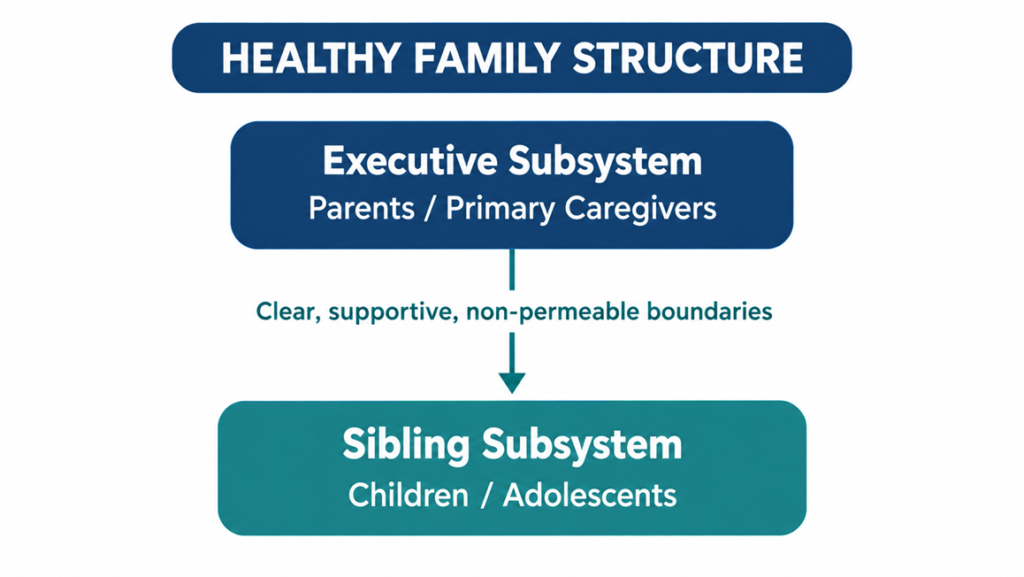
- Parental Coalition: Strengthens the partnership between caregivers so they enforce consistent rules.
- Autonomy Support: Ensures adolescents have appropriate privacy and age-appropriate responsibilities.
4. Improves Coping Mechanisms for Adolescent Behavioral Issues
Evidence-based approaches like Functional Family Therapy (FFT) reduce adolescent conduct issues, substance abuse, and truancy by modifying the surrounding family environment.
Studies evaluating Functional Family Therapy demonstrate significant reductions in youth recidivism and behavioral disruptions compared to individual juvenile interventions alone. When the family environment changes, adolescent behavior shifts naturally.
Real-Life Example:
Marcus, age 14, was frequently getting suspended for angry outbursts in class. Rather than placing Marcus in isolation-based therapy, his family engaged in FFT. They discovered that Marcus’s outbursts spiked following periods of intense financial anxiety between his parents. Once the parents managed how they discussed adult stressors around the kids, Marcus’s school behavior stabilized significantly.
5. Reduces Symptoms of Individual Mental Health Conditions
Family therapy acts as a powerful adjunctive treatment for individual conditions like depression, anxiety, eating disorders, and trauma by strengthening the individual’s support network.
Family Based Treatment (FBT), also known as the Maudsley approach, is recognized as a first-line, evidence-based intervention for adolescent eating disorders such as Anorexia Nervosa. Involving the family in the recovery process leads to faster symptom reduction and lower relapse rates across various mental health challenges.
- Lowered Expressed Emotion (EE): Reduces critical or over-involved family behaviors that correlate with higher psychiatric relapse rates.
- Enhanced Psychoeducation: Helps family members understand clinical symptoms rather than taking behavioral manifestations personally.
6. Strengthens Emotional Intimacy and Connection
Family coaching fosters emotional safety, allowing members to express vulnerability, empathy, and affection without fear of rejection or harsh judgment.
Busy schedules, unresolved past grievances, and daily stress often cause family members to drift apart emotionally. Therapy creates a designated, safe environment where members can express genuine emotional needs that are typically buried under daily routines or defensive anger.
- Shared Vulnerability: Members learn to share underlying feelings (fear, sadness, loneliness) rather than superficial reactions (anger, irritation).
- Validation Practices: Teaches family members how to acknowledge and validate each other’s emotional experiences, even when they disagree on the facts.
7. Assists Navigation Through Major Life Transitions
Family coaching provides structured support during significant life changes such as divorce, blended family integration, job loss, or grief.
Major life shifts disrupt established roles and daily routines. Structural guidance during these periods minimizes long-term distress and helps members adjust smoothly to new family configurations.
Real-Life Example:
Following a remarriage, the Miller-Torres household struggled with household rules. The biological children resisted authority from their new stepfather, leading to daily tension. Therapy helped the couple establish a plan where the biological parent handled discipline initially while the stepparent focused on building rapport, easing the transition for everyone.
8. Breaks Intergenerational Trauma and Unhealthy Patterns
Family coaching identifies and disrupts inherited, dysfunctional relational patterns passed down through generations.
Many unhealthy dynamics such as emotional neglect, harsh punishment, or substance abuse normalization—are learned behaviors passed down from parents to children. Family therapy highlights these unconscious patterns (often utilizing tools like genograms) and equips caregivers to establish healthier practices for future generations.
- Pattern Recognition: Traces behavioral habits back through family history to understand their origin.
- Conscious Parenting: Replaces automatic, reactive parenting styles with intentional, value-driven practices.
9. Increases Overall Resilience and Problem-Solving Skills
Answer: Family therapy equips the entire household with repeatable problem-solving frameworks that remain effective long after therapy ends.
Rather than solving a single temporary issue, effective family therapy acts as a training ground for future challenges. Families build a durable skill set for addressing upcoming stressors, disputes, and unpredictable life events independently.
- Problem Definition: Learning to define issues objectively without assigning personal blame.
- Brainstorming Solutions: Collaboratively generating potential fixes as a team.
- Implementation & Review: Testing solutions at home and adjusting them systematically based on outcomes.
Direct Comparison: Family Coaching vs. Individual Therapy
To understand which approach fits your current household needs best, consider how family coaching compares directly to standard individual therapy across key dimensions:
| Comparison Metric | Family Coaching | Individual Therapy |
| Primary Focus | Relational dynamics, communication, and the family system as a whole. | Individual thoughts, internal emotions, and personal past experiences. |
| Client Definition | The entire family unit (or subsystem) is considered the client. | A single person is the explicit client. |
| Core Goal | Repair systemic patterns, improve shared communication, and set clear boundaries. | Increase personal self-awareness, process personal trauma, and reduce personal symptoms. |
| Session Format | Joint sessions with multiple family members present simultaneously. | One-on-one private sessions between client and clinician. |
| Handling of Issues | Examines how person A’s behavior triggers person B’s reaction in real time. | Examines how the individual processes external stressors internally. |
| Best Suited For | High-conflict homes, co-parenting disputes, adolescent conduct issues, blended families. | Individual depression, personal identity work, internal trauma processing. |
When Should a Family Consider Coaching?
Knowing when to transition from trying to resolve issues internally to seeking professional guidance can prevent long-term relational damage.
Clear Indicators It Is Time to Seek Family Coaching
- Persistent Communication Breakdown: Daily conversations regularly end in shouting matches, tears, or total silence (stonewalling).
- Adolescent Behavioral Changes: Sudden drops in academic performance, emotional withdrawal, or severe behavioral outbursts.
- Unresolved Crisis or Trauma: Difficulty recovering from a major stressor such as a death in the family, financial distress, or severe illness.
- Blended Family Friction: Ongoing conflict surrounding co-parenting, discipline inconsistencies, or boundary confusion in stepfamilies.
- Walking on Eggshells: Family members constantly modify their behavior to avoid triggering an explosive reaction from another member.
How to Get Started with Family Coaching
Taking the first step toward family counseling requires clear communication and practical planning among family members.
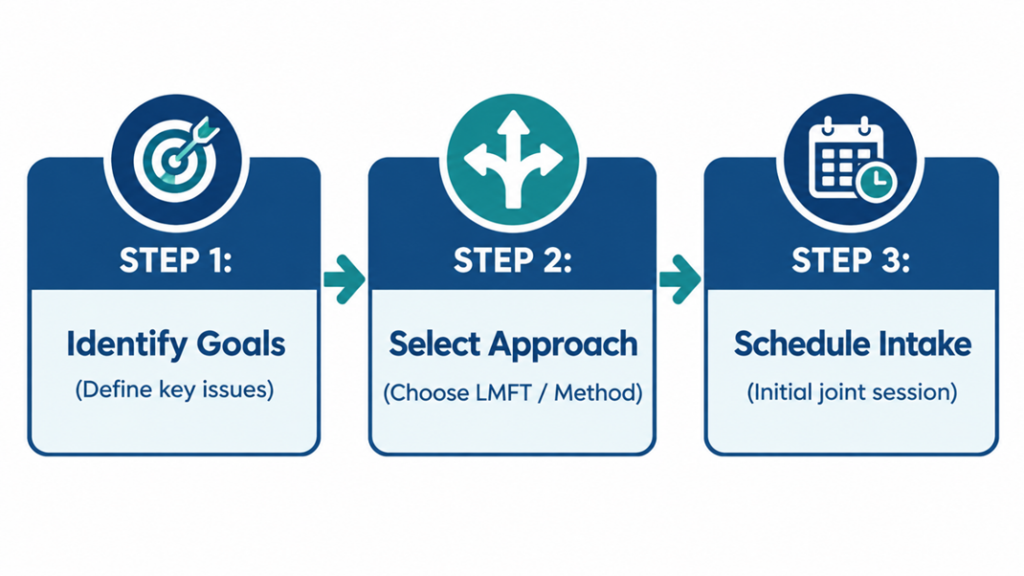
- Discuss the Idea Collaboratively: Frame therapy as an opportunity to support the entire family unit rather than a punishment or fix for one “problematic” member.
- Find a Qualified Specialist: Search for a Licensed Marriage and Family Therapist (LMFT) or a licensed clinician specifically trained in systemic, structural, or functional family therapy approaches.
- Prepare for the First Session: Expect the initial meeting to focus on assessment, establishing safety rules, and defining shared goals for the therapeutic process.
The video below shows how structured family therapy sessions operate in practice and what to expect during initial consultations.
Ready to Restore Peace and Connection in Your Home?
You don’t have to navigate family conflict, stress, or communication breakdowns alone. Our licensed family therapists are here to help your family build healthier habits and stronger bonds.