Strong relationships aren’t built on perfect communication they’re built on healthy communication. Every couple argues, misunderstands each other, or experiences moments of frustration. However, when communication problems become a pattern, they can slowly damage trust, emotional intimacy, and connection.
The good news is that most communication mistakes can be identified and improved. By recognizing common habits that create conflict, couples can develop healthier ways to express feelings, resolve disagreements, and strengthen their relationship.
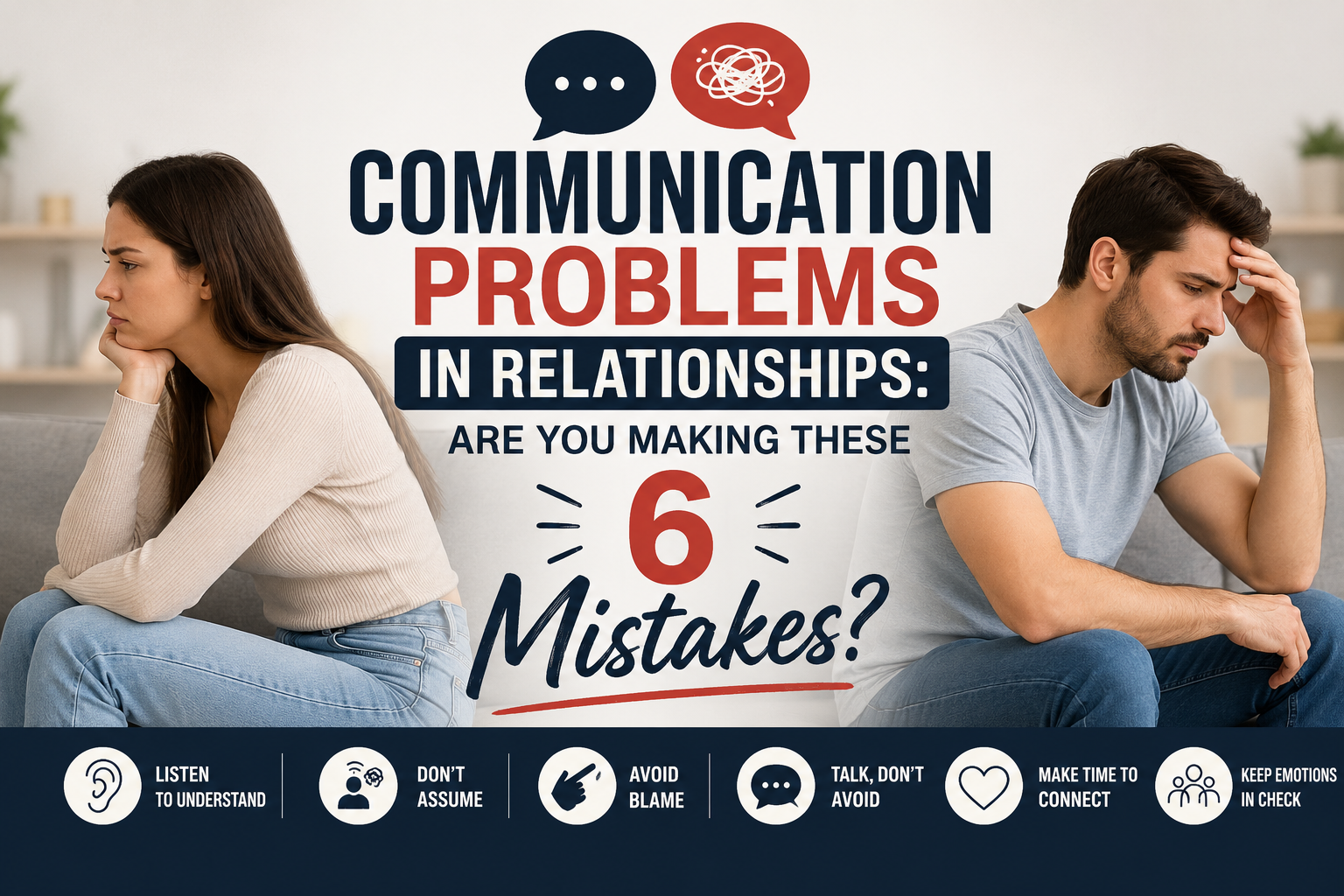
This guide explains six common communication mistakes, how they affect relationships, and practical ways to communicate more effectively.
Why Is Communication Important in a Relationship?
Communication is the foundation of every healthy relationship. It allows partners to express emotions, discuss expectations, solve problems, and build trust.
Healthy communication helps couples:
- Resolve disagreements respectfully
- Feel heard and understood
- Build emotional intimacy
- Prevent misunderstandings
- Strengthen long-term trust
- Support each other during stressful times
Without open communication, even small issues can grow into larger relationship problems.
What Causes Communication Problems in Relationships?
Communication problems usually develop gradually rather than overnight.
Some common causes include:
- Stress from work or finances
- Different communication styles
- Unresolved past conflicts
- Emotional distance
- Poor listening habits
- Assumptions instead of honest conversations
- Fear of conflict
- Lack of quality time together
Recognizing the cause is the first step toward improving communication.
Mistake #1: Listening to Respond Instead of Listening to Understand
Many people believe they’re listening when they’re actually preparing their next response.
Instead of focusing on what their partner is saying, they’re thinking about how to defend themselves or prove they’re right.
Signs this is happening
- Interrupting frequently
- Finishing your partner’s sentences
- Ignoring their emotions
- Focusing only on your own point
A better approach
Practice active listening.
This means:
- Let your partner finish speaking.
- Maintain eye contact.
- Ask clarifying questions.
- Repeat what you heard before responding.
Example:
Instead of saying:
“You’re overreacting.”
Try:
“I want to understand why that upset you.”
Feeling understood often reduces conflict more than finding the “right” answer.
Mistake #2: Assuming Your Partner Knows What You Feel
Many couples expect their partner to “just know” what’s wrong.
Unfortunately, mind-reading isn’t realistic.
Unspoken expectations often lead to disappointment and resentment.
Common examples
- Expecting your partner to notice you’re upset
- Assuming they know what support you need
- Waiting for them to apologize without explaining why you’re hurt
Better communication
Use clear and direct statements.
For example:
Instead of:
- “Fine.”
Say:
- “I’m feeling hurt because I felt ignored during dinner.”
Being honest about your feelings creates opportunities for understanding instead of confusion.
Mistake #3: Using Blame Instead of Expressing Feelings
Blame usually causes defensiveness.
When conversations begin with accusations, partners often stop listening and start protecting themselves.
Blaming statements
- You never listen.
- You always ignore me.
- Everything is your fault.
Healthier alternatives
Use “I” statements.
Examples:
- I feel lonely when we don’t spend time together.
- I felt hurt when my opinion wasn’t considered.
- I’d appreciate more communication during busy days.
“I” statements reduce conflict because they describe emotions rather than assign blame.
Mistake #4: Avoiding Difficult Conversations
Some couples avoid conflict because they believe it keeps the relationship peaceful.
In reality, avoiding important conversations usually makes problems worse.
Small frustrations eventually become major disagreements.
Topics couples often avoid
- Money
- Family boundaries
- Parenting
- Intimacy
- Future goals
- Household responsibilities
Healthy approach
Choose a calm moment.
Focus on solving the problem together instead of proving who’s right.
Remember:
The goal isn’t winning.
The goal is understanding each other.
Mistake #5: Letting Emotions Control the Conversation
Strong emotions can make communication difficult.
When people become overwhelmed, they may:
- Raise their voice
- Say hurtful things
- Shut down completely
- Walk away without resolving anything
Emotional reactions are normal.
However, learning to pause before responding often prevents lasting damage.
Helpful strategies
- Take deep breaths.
- Pause the conversation if emotions become overwhelming.
- Return when both people feel calmer.
- Speak respectfully even during disagreements.
A short break can protect the relationship far better than continuing an argument in anger.
Mistake #6: Never Making Time to Connect
Communication isn’t only about solving problems.
Healthy couples regularly talk when nothing is wrong.
Busy schedules often reduce conversations to:
- Bills
- Children
- Work
- Chores
Over time, emotional connection fades.
Ways to reconnect
- Eat dinner without phones.
- Ask meaningful questions.
- Go for regular walks together.
- Schedule weekly check-ins.
- Share daily highlights and challenges.
Small conversations build stronger relationships over time.
Communication Mistakes vs Healthy Communication Habits
| Poor Communication | Healthy Communication |
| Interrupting | Listening completely |
| Blaming | Expressing feelings respectfully |
| Assuming | Asking questions |
| Avoiding conversations | Addressing issues early |
| Criticizing | Offering constructive feedback |
| Yelling | Speaking calmly |
| Keeping score | Working as a team |
| Defending immediately | Seeking understanding first |
Healthy communication doesn’t eliminate disagreements it changes how couples handle them.
Signs Your Relationship May Have Communication Problems
Not every disagreement signals a serious issue.
However, recurring patterns may indicate communication challenges.
Common warning signs include:
- The same arguments happen repeatedly.
- Conversations quickly become defensive.
- One partner feels unheard.
- Silence lasts for days after disagreements.
- Problems are ignored instead of discussed.
- Emotional distance continues growing.
- Trust begins to weaken.
Recognizing these signs early makes improvement easier.
Simple Habits That Improve Communication Every Day
Healthy communication is built through consistent habits rather than occasional big conversations.
Consider practicing these daily habits:
Give your full attention
Put away phones and eliminate distractions during important conversations.
Ask open-ended questions
Instead of asking:
“Are you okay?”
Try:
“How are you feeling about everything lately?”
Validate emotions
You don’t have to agree with every feeling to acknowledge it.
Simple responses like:
“I understand why you feel that way.”
can reduce tension significantly.
Express appreciation
Regularly acknowledge your partner’s efforts.
Simple gratitude strengthens emotional connection.
Examples:
- Thank you for helping today.
- I appreciate everything you do.
- I’m glad we’re working through this together.
When Should Couples Seek Professional Help?
Sometimes communication problems become too difficult to solve alone.
Couples counseling may help if:
- Arguments become constant.
- Trust has been damaged.
- Communication always ends in conflict.
- One partner has emotionally withdrawn.
- Resentment continues growing.
- Major life changes create ongoing stress.
- Both partners want improvement but don’t know how.
A trained therapist provides tools that help couples communicate more effectively and understand one another without taking sides.
Seeking support is a proactive step toward building a healthier relationship.
Final Thoughts
Communication problems don’t usually begin with one major mistake. They often develop through small habits that repeat over time—interrupting, making assumptions, avoiding difficult conversations, or letting emotions take over.
The encouraging reality is that these habits can change. By listening with empathy, speaking honestly, addressing concerns early, and making time to connect, couples can build stronger communication and healthier relationships. No relationship is free from misunderstandings. The difference between struggling couples and thriving couples is often how they communicate, not how often they disagree. Consistent, respectful communication creates the trust, emotional safety, and connection needed for a lasting relationship.