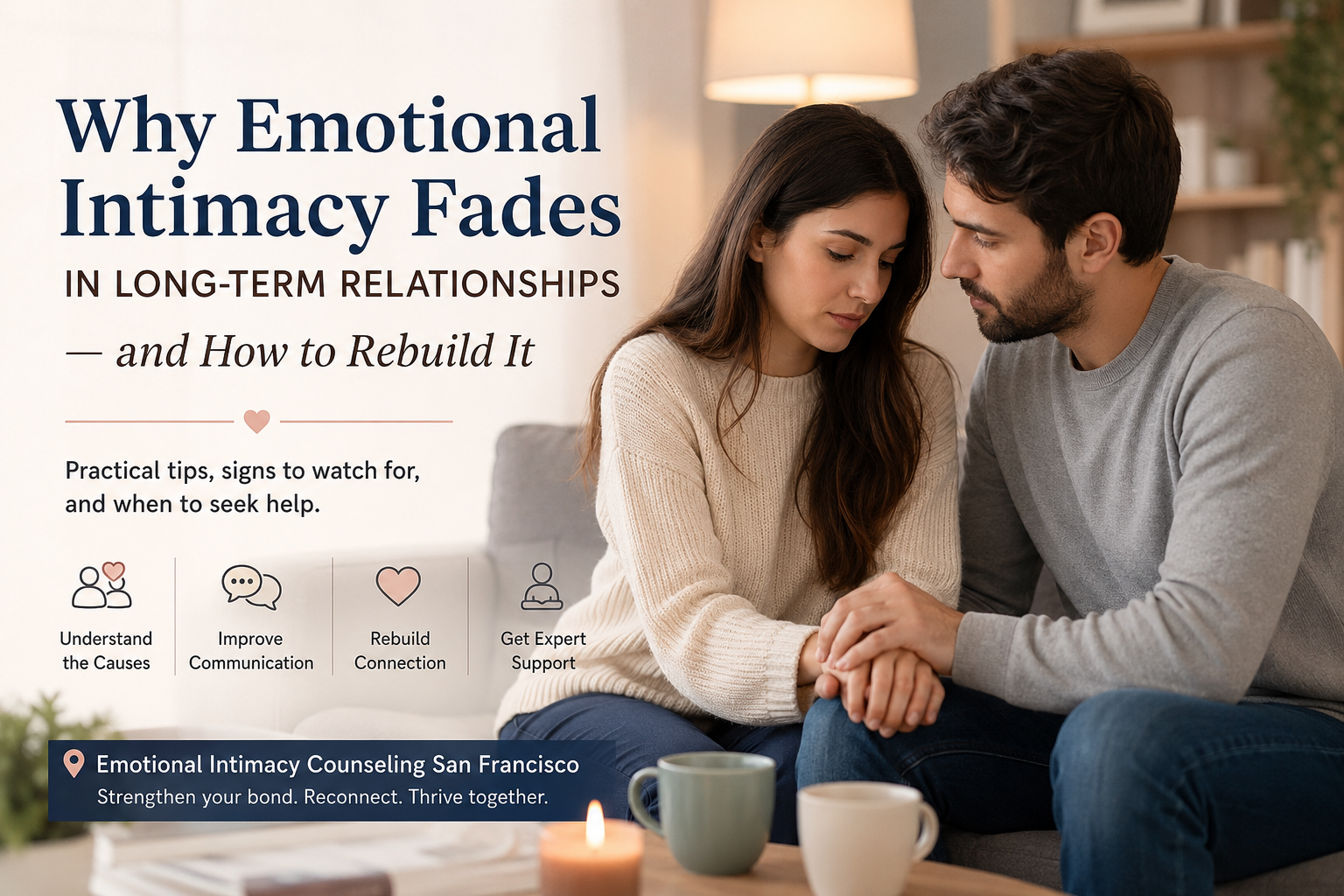
Long-term relationships can survive busy schedules, career changes, parenting, and life’s daily pressures. However, one of the biggest challenges many couples face is the gradual loss of emotional intimacy.
You may still love your partner, but conversations feel shallow, affection becomes less frequent, and you begin to feel more like roommates than romantic partners.
The good news is that emotional connection can be rebuilt. With awareness, healthy communication, and professional support when needed, couples can restore closeness and strengthen their relationship.
If you’re looking for Emotional Intimacy Counseling San Francisco, understanding why emotional distance happens is the first step toward reconnecting.
What Is Emotional Intimacy?
Emotional intimacy is the ability to feel emotionally safe, understood, accepted, and connected with your partner. It goes beyond physical attraction or shared responsibilities.
Emotionally intimate couples:
- Share thoughts openly
- Express feelings honestly
- Feel emotionally safe
- Trust each other
- Support one another during difficult times
- Feel appreciated and valued
Emotional intimacy creates the foundation for lasting love.
Why Does Emotional Intimacy Fade Over Time?
Emotional intimacy usually fades because of repeated life stressors rather than one major event. Many couples don’t intentionally drift apart. Instead, small disconnections slowly build over months or years.
Common reasons include:
- Busy careers
- Parenting responsibilities
- Financial stress
- Poor communication
- Unresolved arguments
- Emotional burnout
- Loss of quality time
- Mental health challenges
- Lack of appreciation
- Assuming your partner “already knows” how you feel
These factors gradually weaken emotional connection if they aren’t addressed.
What Are the Signs Emotional Intimacy Is Fading?
Emotional distance often appears long before couples realize there’s a problem.
Common signs include:
- Conversations only focus on daily tasks
- You rarely share personal thoughts
- Physical affection decreases
- Small disagreements become frequent
- One or both partners feel lonely
- You avoid difficult conversations
- You stop asking meaningful questions
- Date nights disappear
- Trust feels weaker
- Emotional support feels inconsistent
Recognizing these signs early makes rebuilding the relationship easier.
Emotional Intimacy vs. Physical Intimacy
Emotional intimacy and physical intimacy support each other, but they are not the same.
| Emotional Intimacy | Physical Intimacy |
| Built through trust | Built through physical closeness |
| Involves vulnerability | Involves touch and affection |
| Focuses on emotional safety | Focuses on physical connection |
| Grows through communication | Grows through affection and attraction |
| Often strengthens physical intimacy | Often improves when emotional intimacy exists |
Many couples discover that improving emotional intimacy naturally improves physical closeness as well.
Can You Love Someone but Feel Emotionally Disconnected?
Yes. Love and emotional intimacy are different.
Many couples deeply love one another but struggle to connect emotionally because life becomes overwhelming.
Examples include:
- Working opposite schedules
- Raising young children
- Caring for aging parents
- Recovering from betrayal
- Living with chronic stress
Love may remain strong while emotional connection weakens.
Fortunately, emotional intimacy can usually be rebuilt with consistent effort.
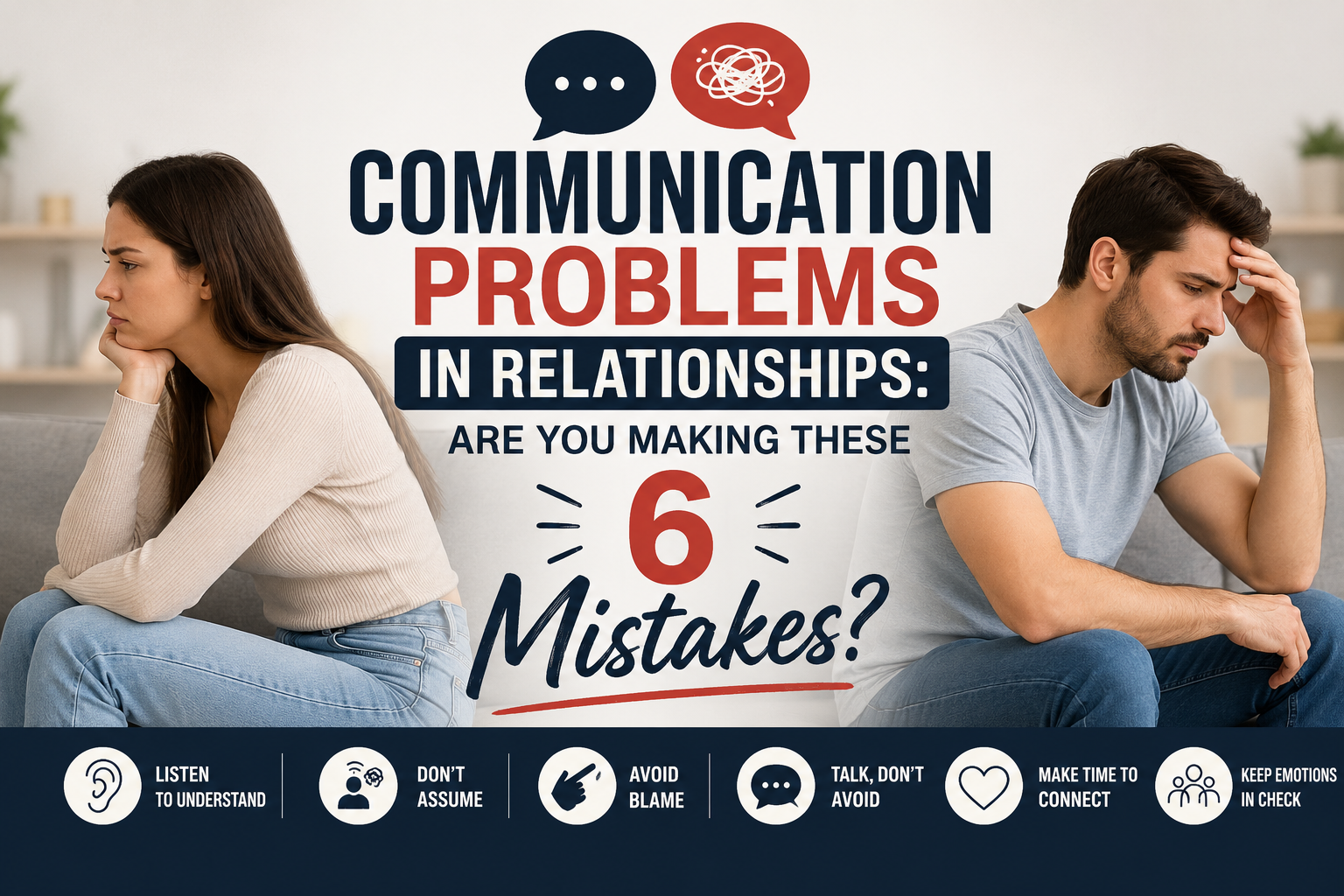
How Does Poor Communication Affect Emotional Intimacy?
Poor communication slowly creates emotional distance.
When partners stop expressing feelings openly, misunderstandings increase.
Examples include:
- Avoiding conflict
- Criticizing instead of listening
- Interrupting conversations
- Assuming negative intentions
- Not expressing appreciation
- Withholding emotions
Healthy communication creates emotional safety, while unhealthy communication creates emotional walls.
How Can You Rebuild Emotional Intimacy?
Rebuilding emotional intimacy starts with intentional daily habits.
Small actions often create meaningful change.
1. Schedule Quality Time
Set aside distraction-free time every week.
Even 20–30 minutes together without phones can strengthen connection.
2. Ask Better Questions
Instead of asking:
- “How was work?”
Try asking:
- What made you smile today?
- What’s been on your mind lately?
- Is there anything stressing you out?
- How can I support you this week?
Meaningful conversations strengthen emotional closeness.
3. Practice Active Listening
Listen without:
- Interrupting
- Solving every problem
- Judging
- Becoming defensive
Sometimes your partner simply wants to feel heard.
4. Show Daily Appreciation
Simple appreciation matters.
Examples include:
- Thank you for helping today.
- I appreciate everything you do.
- I’m proud of you.
- I love spending time with you.
Feeling valued strengthens emotional bonds.
5. Reintroduce Small Acts of Affection
Emotional intimacy often grows through small gestures.
Examples:
- Holding hands
- Hugging longer
- Sitting together
- Leaving thoughtful notes
- Smiling when greeting each other
Consistency matters more than grand gestures.
6. Address Unresolved Conflicts
Old arguments often create emotional barriers.
Instead of avoiding difficult topics:
- Stay calm
- Focus on understanding
- Avoid blame
- Look for solutions together
Resolving conflict respectfully builds trust.
When Should Couples Seek Professional Help?
Couples should seek counseling before emotional distance becomes permanent.
Professional support can help if:
- Conversations always become arguments
- One partner feels emotionally ignored
- Trust has been damaged
- Communication has completely broken down
- You feel more like roommates
- Emotional distance has lasted for months
- You struggle to reconnect despite trying
Early intervention often leads to better outcomes than waiting until the relationship reaches a crisis.
How Emotional Intimacy Counseling Can Help
Counseling provides a structured, supportive environment where couples can rebuild emotional connection.
During Emotional Intimacy Counseling San Francisco, couples often learn how to:
- Communicate without blame
- Express emotions safely
- Rebuild trust
- Understand each other’s emotional needs
- Resolve recurring conflicts
- Improve empathy
- Develop healthier relationship habits
- Restore closeness
A therapist acts as a neutral guide, helping both partners feel heard while teaching practical skills for long-term connection.
Why Emotional Safety Matters
Emotional intimacy cannot exist without emotional safety.
People open up when they believe they won’t be criticized, ignored, or judged.
Emotional safety grows when partners:
- Respect each other’s opinions
- Validate feelings
- Keep promises
- Apologize sincerely
- Stay calm during disagreements
- Encourage vulnerability
When emotional safety increases, deeper connection naturally follows.
Daily Habits That Strengthen Emotional Intimacy
Small daily actions often have a greater impact than occasional grand romantic gestures.
Consider making these habits part of your routine:
- Eat one meal together without distractions.
- Spend 15–20 minutes talking each evening.
- Express gratitude every day.
- Give a genuine compliment.
- Check in emotionally, not just practically.
- Laugh together whenever possible.
- Spend quality time without screens.
- Celebrate small achievements.
- Respect each other’s boundaries.
- End the day with affection or kind words.
These consistent behaviors help maintain emotional closeness over time.
Can Emotional Intimacy Be Restored After Years of Distance?
In many cases, yes.
Even couples who have felt disconnected for years can rebuild their relationship when both partners are willing to participate.
Recovery usually involves:
- Honest communication
- Patience
- Forgiveness
- Consistent effort
- New relationship habits
- Professional guidance when needed
Progress may be gradual, but many couples find their relationship becomes stronger than before because they learn healthier ways to connect.
Final Thoughts
Every long-term relationship experience season of closeness and distance. Emotional intimacy doesn’t disappear overnight it gradually fades when life’s demands, stress, and unresolved issues take priority over connection. The encouraging news is that emotional intimacy can be rebuilt through intentional communication, empathy, trust, and consistent effort.
If you and your partner are feeling disconnected, seeking Emotional Intimacy Counseling San Francisco can provide the tools and guidance needed to reconnect. With the right support and a shared commitment to growth, it’s possible to restore emotional closeness, deepen trust, and build a stronger, more fulfilling relationship for the future.