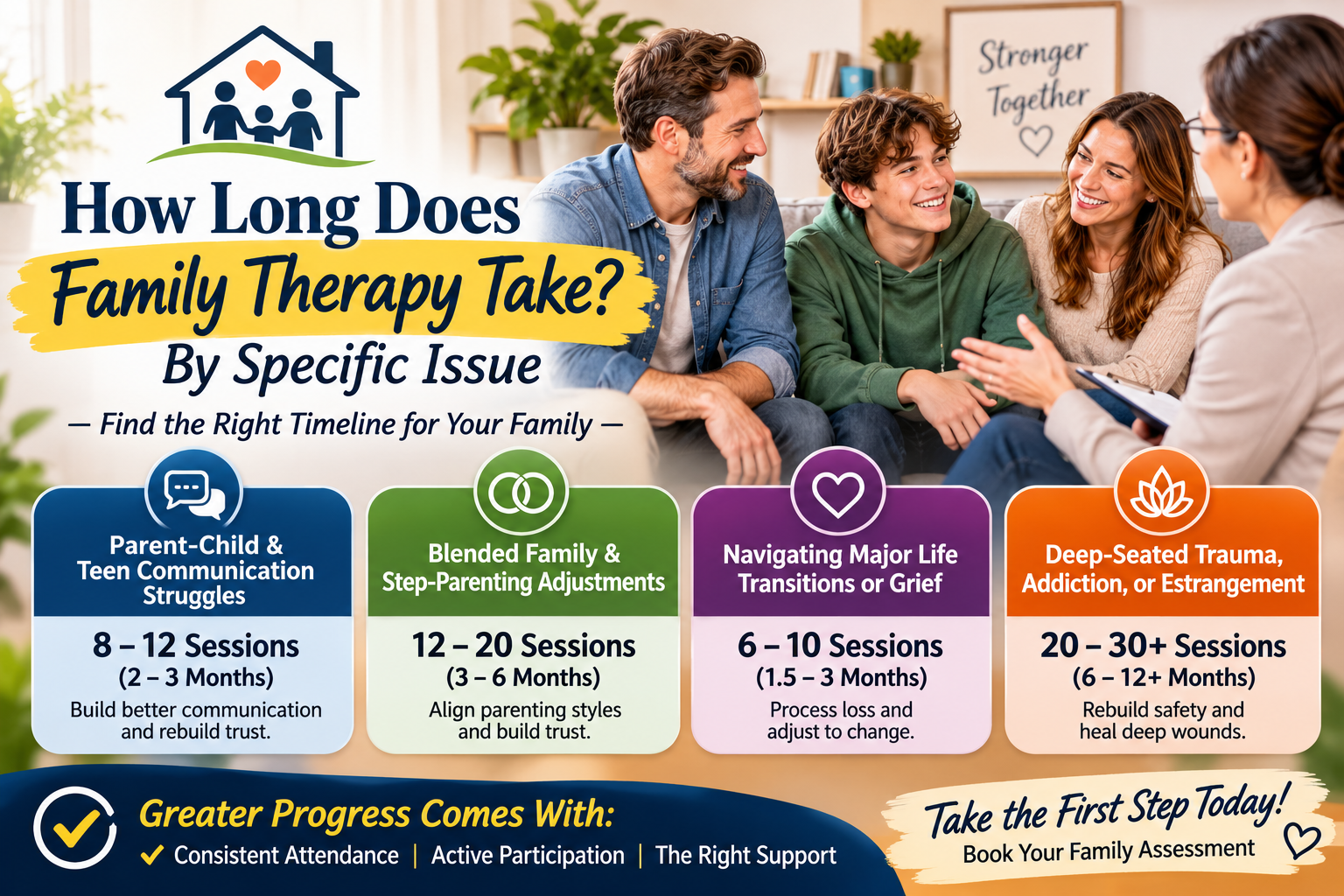
Choosing a family counselor in San Francisco can feel overwhelming because there are many licensed professionals, different therapy styles, and varying approaches to relationship and family challenges. This guide breaks everything into simple, skimmable answers so you can quickly understand what actually matters and make a confident choice.
What does a family counselor actually do?
A family counselor helps families improve communication, resolve conflicts, and strengthen relationships. Sessions may include parents, children, couples, or the whole family depending on the situation.
In simple terms:
They act as a neutral guide who helps your family talk through problems in a healthier way.
Common issues they help with:
- Parenting conflicts
- Marriage or couple communication issues
- Teen behavioral problems
- Divorce or separation adjustment
- Grief, stress, or trauma affecting the family system
Why is choosing the right counselor so important?
Not every counselor is the right fit for every family. The “right” counselor can make therapy feel safe, productive, and practical. The “wrong” fit may feel uncomfortable or ineffective.
Key reason it matters:
- Therapy success depends heavily on trust and communication
- Different counselors use different methods and personalities
- Family dynamics require specialized skills, not just general counseling
What qualifications should a good family counselor in San Francisco have?
A qualified family counselor should meet professional licensing standards in California.
Look for:
- LMFT (Licensed Marriage and Family Therapist)
- LCSW (Licensed Clinical Social Worker)
- Psychologist (PhD or PsyD with clinical experience)
Also important:
- Experience with family or couples therapy (not just general therapy)
- Training in evidence-based methods like CBT, EFT, or systemic therapy
How do I know if a counselor is the right fit for my family?
The right fit is not just about credentials it’s about comfort and connection.
Ask yourself after the first session:
- Did I feel heard without judgment?
- Did the counselor stay neutral and balanced?
- Did they explain things clearly?
- Did I feel safe talking openly?
Green flags:
- They listen more than they talk
- They don’t take sides in family conflicts
- They give practical tools, not just opinions
Red flags:
- They blame one family member too quickly
- You feel judged or dismissed
- They don’t respect cultural or family values
What types of therapy approaches are commonly used?
Different counselors use different methods. Understanding this helps you choose faster.
Common approaches:
- Cognitive Behavioral Therapy (CBT): Focuses on thoughts and behavior patterns
- Emotionally Focused Therapy (EFT): Focuses on emotional bonding and attachment
- Structural Family Therapy: Looks at family roles and boundaries
- Solution-Focused Therapy: Focuses on quick, practical solutions
Comparison: Individual Counseling vs Family Counseling
This is where many people get confused.
Family Counseling
- Focuses on the whole family system
- Multiple members attend sessions
- Improves communication between all parties
- Best for shared conflicts or parenting issues
Individual Counseling
- Focuses on one person’s thoughts and emotions
- Private, one-on-one sessions
- Helps with personal trauma, anxiety, or self-growth
- May indirectly improve family dynamics
Simple decision rule:
- If the problem involves “us” → choose family counseling
- If the problem is mainly “me” → start with individual therapy
How much does family counseling cost in San Francisco?
San Francisco is one of the most expensive therapy markets in the U.S., so pricing varies widely.
Typical ranges:
- $120 to $300 per session (private practice)
- $50 to $150 (sliding scale or community clinics)
- Some insurance plans partially cover therapy
Tip:
Always ask about sliding scale options if cost is a concern.
What questions should I ask before booking a counselor?
Before committing, ask a few direct questions to avoid mismatch.
Good questions:
- “Do you have experience with families dealing with [your issue]?”
- “What is your therapy approach?”
- “How do you handle conflict between family members in sessions?”
- “Do you offer online sessions or only in-person in San Francisco?”
- “What does a typical treatment plan look like?”
Where can I find family counselors in San Francisco?
You can find licensed professionals through:
Common sources:
- Online therapy directories (filter by “family therapy”)
- Local clinics and mental health centers
- Insurance provider networks
- Community referrals or school counselors
Tip:
Always verify licensing through California’s official licensing board before booking.
What makes San Francisco family counseling unique?
San Francisco has a diverse population and fast-paced lifestyle, which shapes therapy needs.
Common local factors:
- High work stress from tech and corporate jobs
- Diverse cultural and multilingual families
- High cost of living affecting family pressure
- Greater acceptance of therapy as a normal support tool
This means many counselors in the city are experienced with multicultural and high-stress family dynamics.
Final checklist: How to choose the right counselor quickly
Use this simple checklist before making a decision:
- Licensed (LMFT, LCSW, or Psychologist)
- Experience with family therapy
- Comfortable communication style
- Clear treatment approach explained
- Good reviews or referrals
- Flexible scheduling (in-person or online)
- Affordable or insurance-compatible
Final thought
Choosing the right family counselor in San Francisco is less about finding a “perfect” therapist and more about finding the right match for your family’s communication style, needs, and comfort level. When the fit is right, therapy feels less like a formal process and more like guided support that helps your family reconnect and move forward together.