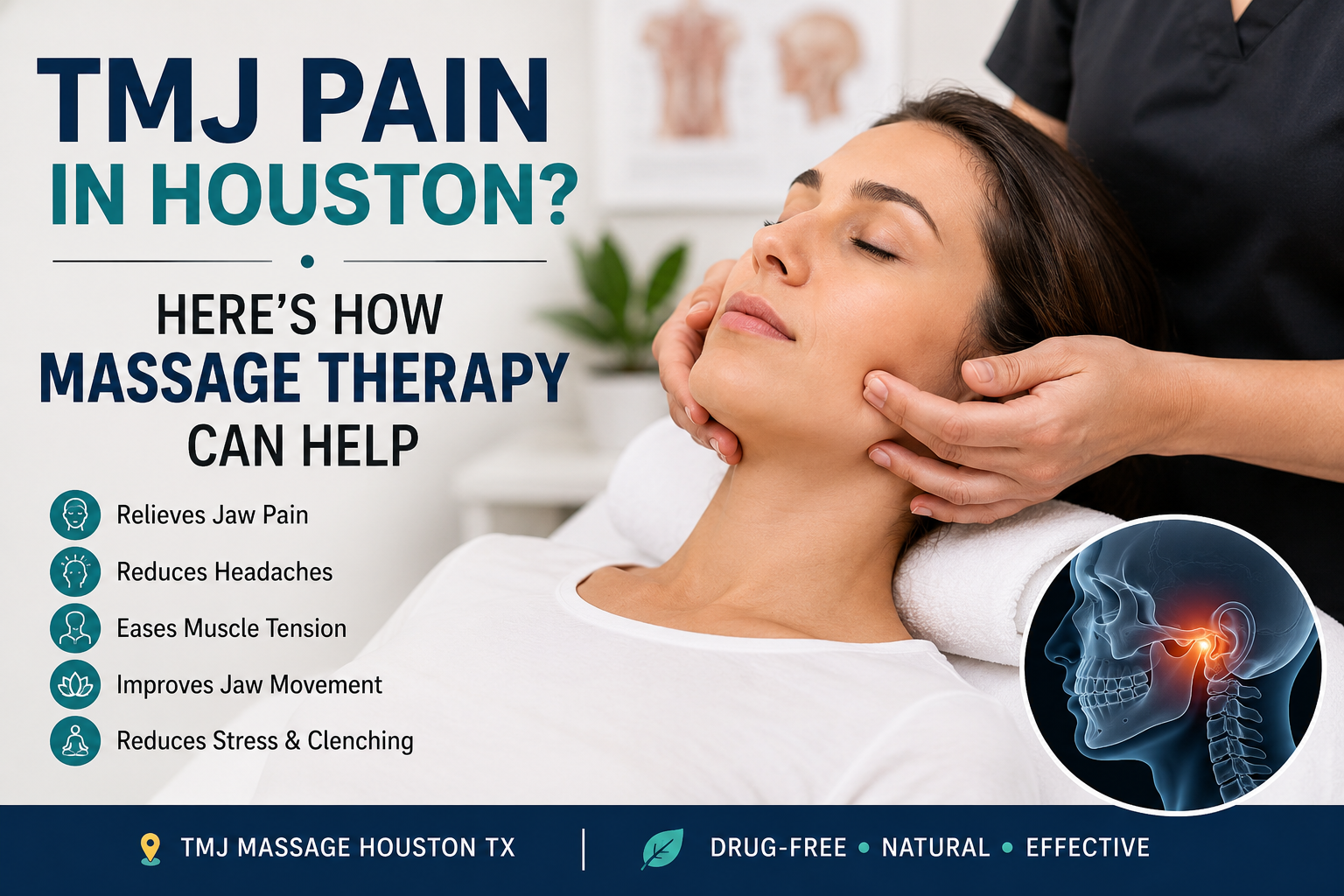
If you’re dealing with jaw pain, headaches, or stiffness when chewing, you may have a temporomandibular joint (TMJ) disorder. Many people in Houston experience TMJ pain without realizing that massage therapy can be part of an effective treatment plan.
This guide explains how TMJ Massage Houston TX services can help reduce pain, improve jaw function, and support long-term recovery.
What Is TMJ?
TMJ stands for the temporomandibular joint, the joint that connects your jaw to your skull. You have one joint on each side of your face, allowing you to talk, chew, yawn, and move your jaw smoothly.
When the muscles or joint become irritated, inflamed, or tight, it can lead to TMJ disorder (TMD).
Common causes include:
- Teeth grinding (bruxism)
- Jaw clenching
- Stress and anxiety
- Poor posture
- Arthritis
- Jaw injury
- Misaligned bite
What Are the Symptoms of TMJ Disorder?
TMJ symptoms can vary from mild discomfort to chronic pain.
Common signs include:
- Jaw pain or tenderness
- Clicking or popping sounds
- Difficulty opening the mouth
- Facial pain
- Ear pain without infection
- Headaches or migraines
- Neck and shoulder tension
- Pain while chewing
- Jaw locking
If these symptoms continue for weeks, it may be time to consider professional treatment such as TMJ Massage Houston TX.
How Does Massage Therapy Help TMJ Pain?
Massage therapy targets the muscles that support jaw movement.
When these muscles become tight, they can pull on the jaw joint and increase pain.
Massage therapy helps by:
- Relaxing tight jaw muscles
- Reducing muscle spasms
- Improving blood circulation
- Increasing jaw mobility
- Lowering stress levels
- Decreasing inflammation
- Relieving tension in the neck and shoulders
Many people notice reduced pain and improved movement after several sessions.
Which Muscles Are Treated During TMJ Massage?
A therapist does not only work on the jaw.
They often treat surrounding muscles that affect jaw function, including:
- Masseter muscle
- Temporalis muscle
- Sternocleidomastoid (SCM)
- Upper trapezius
- Neck muscles
- Shoulder muscles
- Facial muscles
Treating these connected muscles often provides better long-term relief than focusing on the jaw alone.
TMJ Massage vs Pain Medication
Many people wonder which option is better.
| TMJ Massage | Pain Medication |
| Treats muscle tension | Temporarily masks pain |
| Improves jaw movement | Does not improve mobility |
| Helps reduce stress | No effect on stress |
| Supports long-term recovery | Short-term symptom relief |
| Drug-free approach | May have side effects |
Massage therapy does not replace medical care, but it can be an effective part of a comprehensive treatment plan.
What Happens During a TMJ Massage Session?
A typical TMJ Massage Houston TX session starts with an assessment of your symptoms.
Your therapist may ask about:
- Jaw pain location
- Clicking or popping
- Headaches
- Neck pain
- Daily habits like clenching or grinding
During treatment, the therapist may use:
- Gentle facial massage
- Trigger point therapy
- Neck massage
- Shoulder release
- Myofascial techniques
- Intraoral massage (performed only by trained professionals when appropriate)
The pressure is usually gentle to moderate and adjusted for your comfort.
Who Can Benefit from TMJ Massage?
Massage therapy may help people who experience:
- Chronic jaw pain
- Frequent headaches
- Neck stiffness
- Stress-related jaw clenching
- Teeth grinding
- Limited jaw movement
- Muscle tightness around the face
Many office workers also benefit because poor posture often contributes to TMJ symptoms.
How Many Sessions Are Usually Needed?
Every case is different.
The number of sessions depends on:
- Severity of symptoms
- How long you’ve had TMJ pain
- Muscle tension levels
- Stress habits
- Overall health
Some people notice improvement after one or two sessions, while chronic cases often require ongoing treatment combined with home care exercises.
Consistency usually provides the best results.
What Can You Do at Home to Support Recovery?
Massage works best when combined with healthy daily habits.
Helpful tips include:
- Avoid chewing gum
- Eat softer foods during flare-ups
- Practice stress management
- Improve posture while working
- Stretch your neck regularly
- Apply warm compresses
- Avoid excessive jaw movements
- Stay hydrated
These simple habits can reduce muscle tension between massage appointments.
Is TMJ Massage Safe?
For most people, TMJ massage is considered safe when performed by a qualified massage therapist.
However, you should speak with your healthcare provider if you have:
- Recent jaw fractures
- Severe arthritis
- Active infection
- Recent facial surgery
- Certain neurological conditions
A licensed therapist can also determine whether massage is appropriate based on your symptoms.
Why Choose TMJ Massage in Houston, TX?
Houston residents often experience stress from busy work schedules, long commutes, and daily responsibilities. These factors can contribute to jaw clenching and muscle tension.
Choosing a provider that specializes in TMJ Massage Houston TX offers several benefits:
- Experience treating jaw dysfunction
- Customized treatment plans
- Knowledge of facial anatomy
- Integration with other wellness therapies
- Focus on long-term pain relief instead of temporary fixes
Working with an experienced therapist can make a significant difference in your recovery.
Frequently Asked Questions
Can massage completely cure TMJ?
Massage therapy helps reduce muscle tension and pain, but it may not cure every underlying cause of TMJ disorder. Many people experience significant symptom improvement with regular treatment.
Does TMJ massage hurt?
Most treatments are gentle. Some tight muscles may feel tender during therapy, but discomfort should remain manageable.
How long does a session last?
Most TMJ massage sessions last between 30 and 60 minutes, depending on your treatment plan.
Can massage help headaches caused by TMJ?
Yes. Many TMJ-related headaches are linked to muscle tension in the jaw, neck, and shoulders. Massage therapy can help reduce this tension and lessen headache frequency.
Is TMJ massage only for severe cases?
No. Many people seek massage therapy when symptoms are mild to prevent them from becoming chronic.
Final Thoughts
TMJ pain can affect eating, speaking, sleeping, and your overall quality of life. Fortunately, massage therapy offers a non-invasive, drug-free approach that focuses on relieving muscle tension, improving jaw mobility, and reducing stress.
If you’re searching for TMJ Massage Houston TX, choosing a qualified therapist who understands TMJ dysfunction can be an important step toward lasting relief. Combined with healthy habits and professional guidance, massage therapy can help you manage symptoms more comfortably and improve your daily well-being.