Feeling anxious can be exhausting but finding the right type of therapy doesn’t have to be confusing.
CBT, DBT, and talk therapy can all help with anxiety, but they work in different ways. The best choice depends on your symptoms, goals, coping patterns, and what kind of support feels most useful to you.
Here’s a simple, practical breakdown to help you understand the differences.
What Is the Best Therapy for Anxiety?
Cognitive behavioral therapy (CBT) is often a strong first choice for anxiety because it focuses directly on anxious thoughts, behaviors, and avoidance patterns. However, DBT or traditional talk therapy may be a better fit for some people.
The right treatment depends on questions such as:
- Do you want practical tools for managing anxiety?
- Do your emotions feel overwhelming or difficult to regulate?
- Do you mainly need a safe space to understand what you’re feeling?
- Are relationship patterns contributing to your anxiety?
- Do you want structured exercises between sessions?
There isn’t one therapy that is universally “best.” The goal is to find an approach that matches how your anxiety works and what you want therapy to accomplish.
CBT for Anxiety: What Does It Actually Do?
CBT helps you identify and change unhelpful thought patterns and behaviors that can maintain anxiety.
Anxiety can create a cycle:
Anxious thought → fear → avoidance → temporary relief → stronger anxiety later
For example, someone might think:
“If I make a mistake during the presentation, everyone will think I’m incompetent.”
That thought can trigger physical anxiety and lead the person to avoid presentations altogether. CBT helps examine the thought, test whether it is accurate, and develop a more balanced response.
CBT may help with:
- Generalized anxiety
- Social anxiety
- Panic symptoms
- Specific fears and phobias
- Excessive worrying
- Avoidance behaviors
- Anxiety-related negative thinking
CBT is generally structured and goal-oriented, making it appealing to people who want practical strategies they can use outside therapy.
DBT for Anxiety: When Can It Help?
Dialectical behavior therapy (DBT) teaches skills for managing intense emotions, distress, relationships, and impulsive reactions.
Although DBT was originally developed for specific mental health challenges, its skills can also be useful when anxiety is connected to emotional overwhelm, interpersonal conflict, or difficulty coping with distress.
DBT commonly focuses on four skill areas:
- Mindfulness — noticing thoughts and emotions without immediately reacting.
- Distress tolerance — getting through difficult moments without making them worse.
- Emotion regulation — understanding and managing intense emotions.
- Interpersonal effectiveness — communicating needs and maintaining healthier relationships.
For someone whose anxiety feels like an emotional “flood,” DBT can provide concrete tools for getting through those moments.
What Is Talk Therapy?

Talk therapy is a broad term for therapeutic approaches where talking with a trained mental health professional helps you understand emotions, experiences, relationships, and patterns.
Unlike highly structured CBT, some forms of talk therapy may spend more time exploring:
- Past experiences
- Relationships
- Emotional patterns
- Personal beliefs
- Current life stress
- Self-esteem
- Grief and loss
- Conflicts or difficult transitions
Talk therapy can be especially valuable when you don’t simply want to “stop feeling anxious” but want to understand why certain situations affect you so strongly.
CBT vs. DBT vs. Talk Therapy: What’s the Difference?
| Therapy | Main Focus | Best Fit For | Style |
| CBT | Thoughts and behaviors | Anxiety, worry, avoidance | Structured and practical |
| DBT | Emotions, distress, relationships | Emotional overwhelm and coping difficulties | Skills-based |
| Talk Therapy | Emotions, experiences, and patterns | Personal insight and broader concerns | Exploratory and conversational |
In simple terms:
Choose CBT if:
You want to change anxious thoughts and behaviors using practical techniques.
Consider DBT if:
Your anxiety comes with intense emotions, distress, or relationship difficulties.
Consider talk therapy if:
You want to explore the deeper emotional and personal factors connected to your anxiety.
And importantly, these approaches aren’t always mutually exclusive. A therapist may incorporate techniques from multiple evidence-based approaches depending on your needs.
Which Therapy Is Most Structured?
CBT is typically the most structured of the three.
Sessions often involve identifying specific problems, learning techniques, practicing new ways of thinking, and sometimes completing exercises between appointments.
DBT is also highly structured, particularly when delivered through a comprehensive DBT program.
Talk therapy can be more flexible and exploratory, depending on the specific therapeutic approach and therapist.
If you prefer having clear goals, exercises, and measurable steps, CBT may feel especially comfortable.
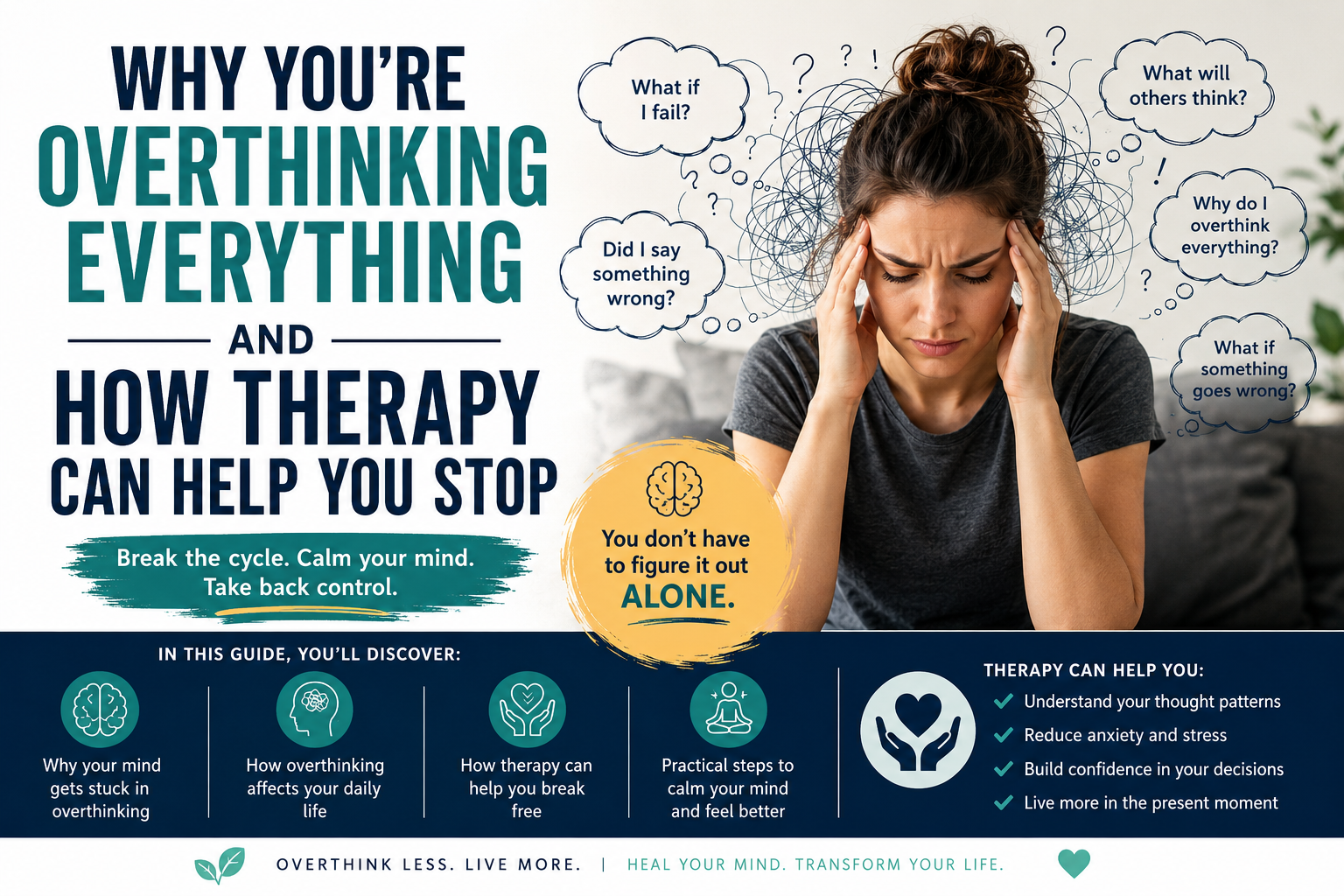
Which Therapy Is Better for Overthinking?
CBT is often particularly useful for persistent overthinking because it teaches you to recognize thought patterns and evaluate whether your thoughts are accurate, helpful, or based on assumptions.
For example, CBT can help you distinguish between:
“Something might go wrong.”
and
“Something will definitely go wrong, and I won’t be able to handle it.”
The goal isn’t to force positive thinking. Instead, CBT encourages more realistic and flexible thinking.
Which Therapy Is Better for Emotional Overwhelm?
DBT may be particularly useful when anxiety is closely connected to intense emotional reactions or difficulty tolerating distress.
DBT emphasizes practical skills that can help you pause before reacting and manage difficult emotions more effectively.
For example, instead of immediately responding to a stressful situation, you may learn strategies to:
Pause → Notice → Regulate → Choose a response
That skill can be valuable when anxiety feels physically and emotionally overwhelming.
Can Talk Therapy Help Anxiety Without CBT or DBT?
Yes.
You don’t necessarily need a specific therapy label for therapy to be helpful.
A therapist can help you explore what triggers your anxiety, how it affects your relationships and daily life, and what patterns may be keeping you stuck.
For some people, simply having a consistent, nonjudgmental environment to process difficult experiences can be an important part of recovery.
However, if anxiety is significantly affecting your daily functioning, a more structured anxiety-focused approach may be worth discussing with a qualified mental health professional.
How Do You Choose the Right Anxiety Treatment?
Start by identifying what you want to change.
Ask yourself:
1. “I want practical tools.”
CBT may be a strong option.
2. “My emotions become overwhelming.”
DBT skills may be helpful.
3. “I want to understand myself better.”
A talk-therapy approach may be a good starting point.
4. “I avoid situations because I’m afraid.”
CBT may help address avoidance and anxious thinking.
5. “My anxiety is strongly connected to relationships.”
Talk therapy, DBT, or another relationship-focused approach may be appropriate.
You can also tell a therapist exactly what you’re experiencing and ask which approach they recommend.
What If You Don’t Know Which Therapy You Need?
You don’t have to diagnose yourself before starting therapy.
A qualified therapist can assess your concerns, discuss your goals, and help determine which therapeutic approach or combination of approaches may make sense.
The first conversation can be as simple as:
“I’m experiencing anxiety, but I’m not sure what kind of therapy I need.”
That’s enough to begin.
How Long Does Anxiety Therapy Take?
There is no universal timeline for anxiety treatment.
Some people benefit from a relatively focused course of therapy, while others prefer longer-term support.
The timeline can depend on:
- Severity of symptoms
- How long anxiety has been present
- Specific type of anxiety
- Personal goals
- Treatment approach
- Progress between sessions
- Other life circumstances
Rather than focusing only on the number of sessions, look for meaningful progress, such as improved coping, reduced avoidance, healthier thinking patterns, or greater emotional control.
The Bottom Line: CBT, DBT, or Talk Therapy?
CBT, DBT, and talk therapy can all have a place in anxiety treatment the best option depends on your specific needs.
If you want structured strategies for anxious thoughts and behaviors, CBT may be a good fit.
If you struggle with intense emotions and distress, DBT skills may be worth exploring.
If you want to understand your emotions, experiences, and relationship patterns more deeply, talk therapy may be a better starting point.
Most importantly, therapy isn’t about choosing the “perfect” label. It’s about finding a qualified professional and treatment approach that helps you understand your anxiety, develop healthier coping skills, and move toward the life you want.
Ready to Take the Next Step?
You don’t have to figure out anxiety treatment alone. A qualified therapist can help you understand what’s driving your anxiety and determine which therapeutic approach may best fit your goals. If anxiety is interfering with your relationships, work, sleep, or everyday life, consider reaching out to a mental health professional for personalized guidance.